
9
The Roman Scutum: What the Shield Was Made Of
- Script
- Images
- Animation
- Article
- Fact-check
- Narration
- Render
- Review
- Release
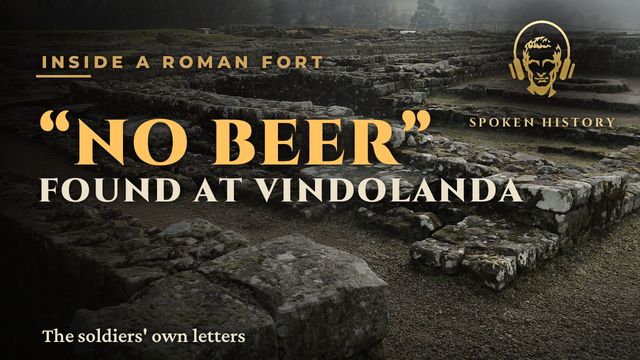
Vindolanda, just south of Hadrian's Wall, is not one Roman fort but many, built one on top of another from about A.D. 85. The textbook plan of a fort and what the ancient texts really say...
Read the story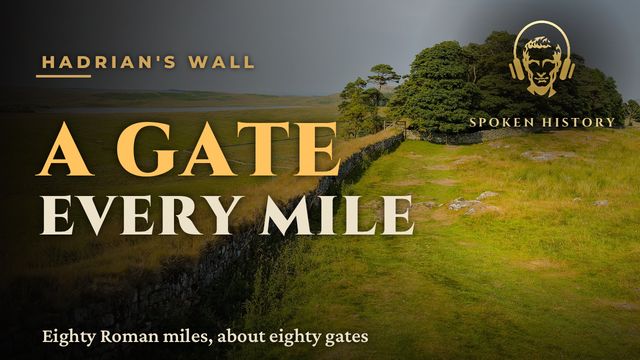 Premiere soon
Hadrian's Wall: eighty Roman miles of stone and turf from the Tyne to the Solway. Only one ancient sentence credits Hadrian; the proof is in the stones: RIB 1638 naming Hadrian and...
Read the story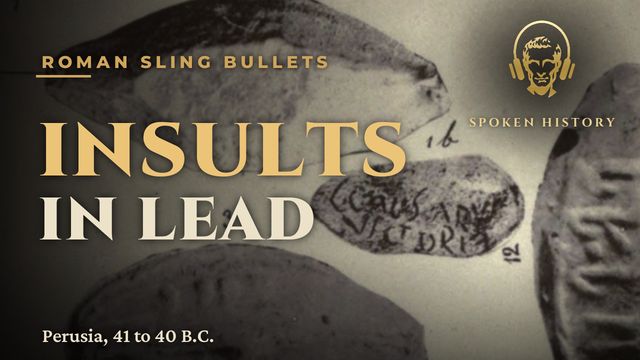
Roman lead sling bullets, the glandes: how they were cast, what the inscribed bullets from Octavian's siege of Perusia (41 to 40 B.C.) say, the disputed story of three hundred sacrificed at...
Read the story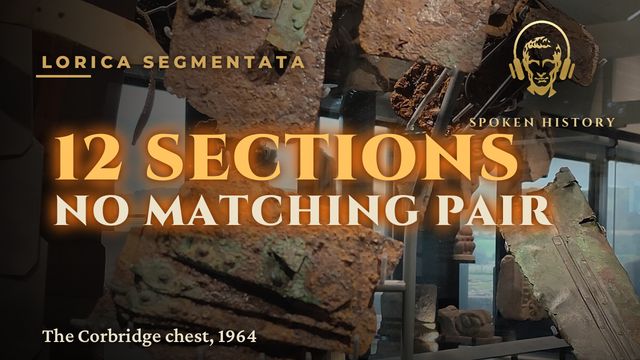
In 1964 a training dig at Corbridge, close to Hadrian's Wall, found a chest buried under a floor with twelve unmatched sections of Roman plate armour. What the lorica segmentata was, why...
Read the story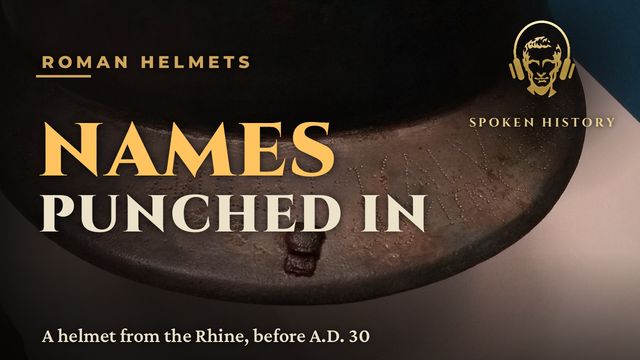
Caesar writes that at the Sabis in 57 B.C. his men had no time even to put on their helmets. What were Roman helmets really? The modern type names (Montefortino, Coolus, Hagenau, Weisenau...
Read the story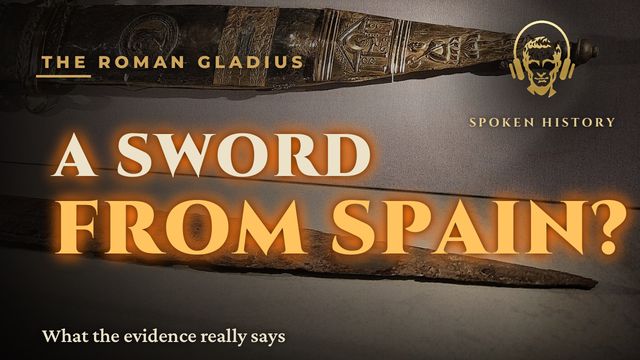
Livy says Philip V's soldiers were horrified by the wounds of the Spanish sword. What was the Roman gladius, really? The origin story in the Suda and the dispute over when and from whom...
Read the story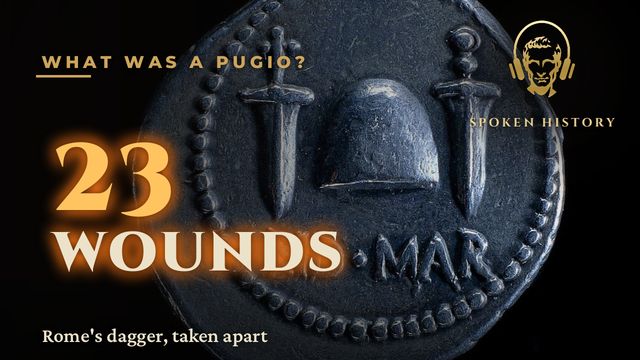
A coin struck by Caesar's killers shows two daggers. The pugio, Rome's short dagger, appears in the stories of Caesar, Scaevinus, Arria and Sertorius, none of them a battle. What museums...
Read the story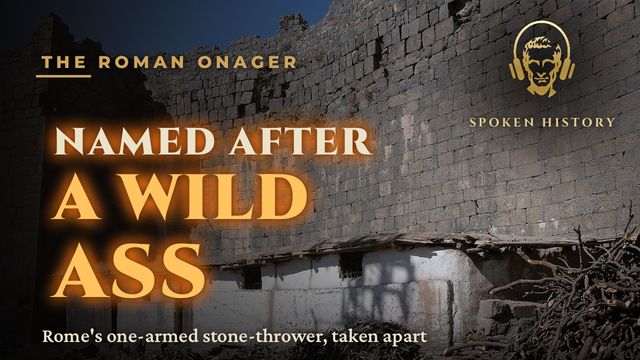
A one-armed Roman stone-thrower, named after a wild ass, shook Persian siege towers apart at Amida in A.D. 359. How it worked, how it was crewed and carried, what it really did, and what...
Read the story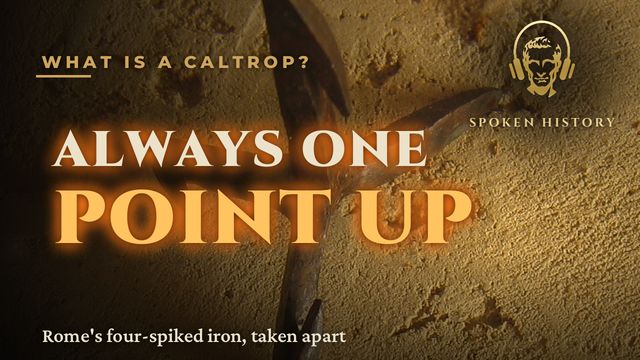
A few centimetres of iron with four spikes, so shaped that one point always stands up. What the Romans called it, the story of buried caltrops at Gaugamela that only Curtius tells, Vegetius...
Read the story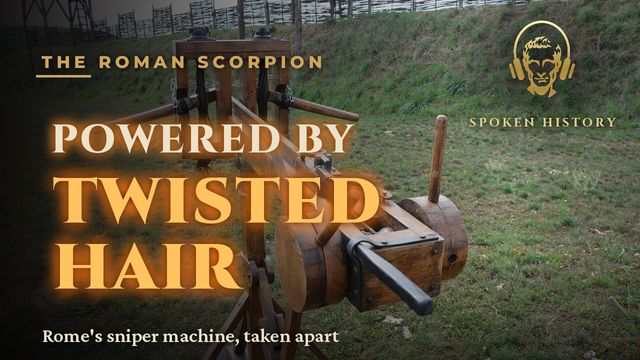
A Gaulish warrior on a burning wall is hit by a bolt from a machine he never saw. The Roman scorpion was a torsion bolt-shooter powered by twisted sinew and hair. How it worked, who built...
Read the storyNo episode matches. Widen the period or clear the search.
Episodes in the order of the events they tell
No episode matches the filters above.
Every place that appears in an episode
No place matches the filters above.
The subjects that come up most often, and every other topic from A to Z. Each one leads to the episodes and articles that cover it.
Topics that appear in more than one episode
Nothing here is rushed. Each episode passes the same nine steps before it is released. 12 further topics are researched and waiting. Updated 17 November 2026, 06:55 (Berlin time).
Primary sources, excavation reports and named scholars are read first. Every sentence is written down with its source.
Only images from the right time and place, with free licences and a credit for each one.
Drawn to match the evidence, not the movies. Reconstructions are labelled as such.
The story as a page you can read, with the sources and image credits.
A different reader checks every sentence, number and picture against the sources.
The script is narrated line by line and checked by ear.
Picture, music and narration are put together and measured.
The finished video is checked frame by frame for pace, text size and mistakes.
The episode is published together with its article.