
Roman Helmets: From Montefortino to Imperial Gallic
Roman HelmetRoman HelmetsRoman Legionary HelmetMontefortino HelmetCoolus HelmetImperial Gallic Helmet
57 B.C. Northern Gaul, beside a river the Romans called the Sabis. Six of Caesar's legions have marched in, and the men are digging the defences of their camp. Then the Nervii burst out of the woods. So fast, Caesar writes, that they seemed to be at the forest edge, in the river, and at close quarters, almost at the same moment. In the Loeb translation: the time was so short, the temper of the enemy so ready for conflict, that there was no space not only to fit badges in their places, but even to put on helmets. Men fought where they stood, under the first standard they saw.
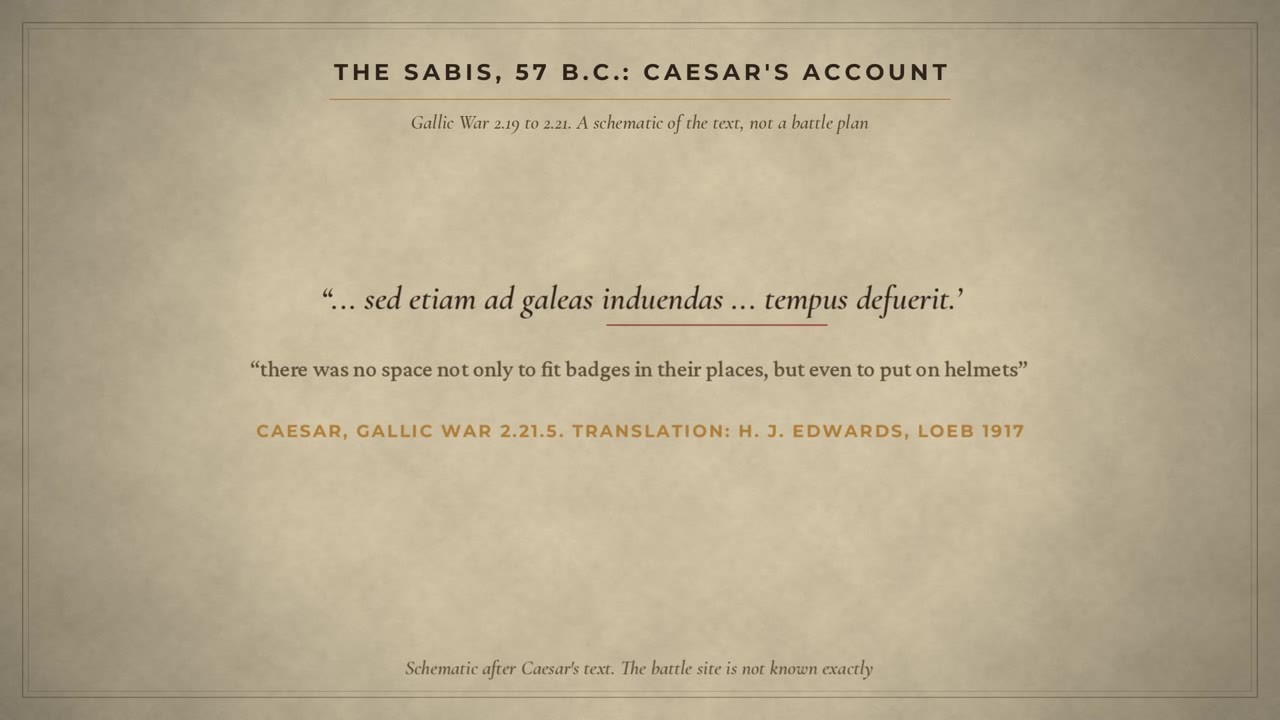
So while they dug, their helmets were not on their heads. And when the attack came, there was no time to put them on. The Roman helmet. Last time I asked: the helmets, or the scutum? Here are the helmets. Today: what it was, what has been dug up, and what the texts really say. And the first surprise: not one of the type names on the museum labels is Roman.
Names Rome never used
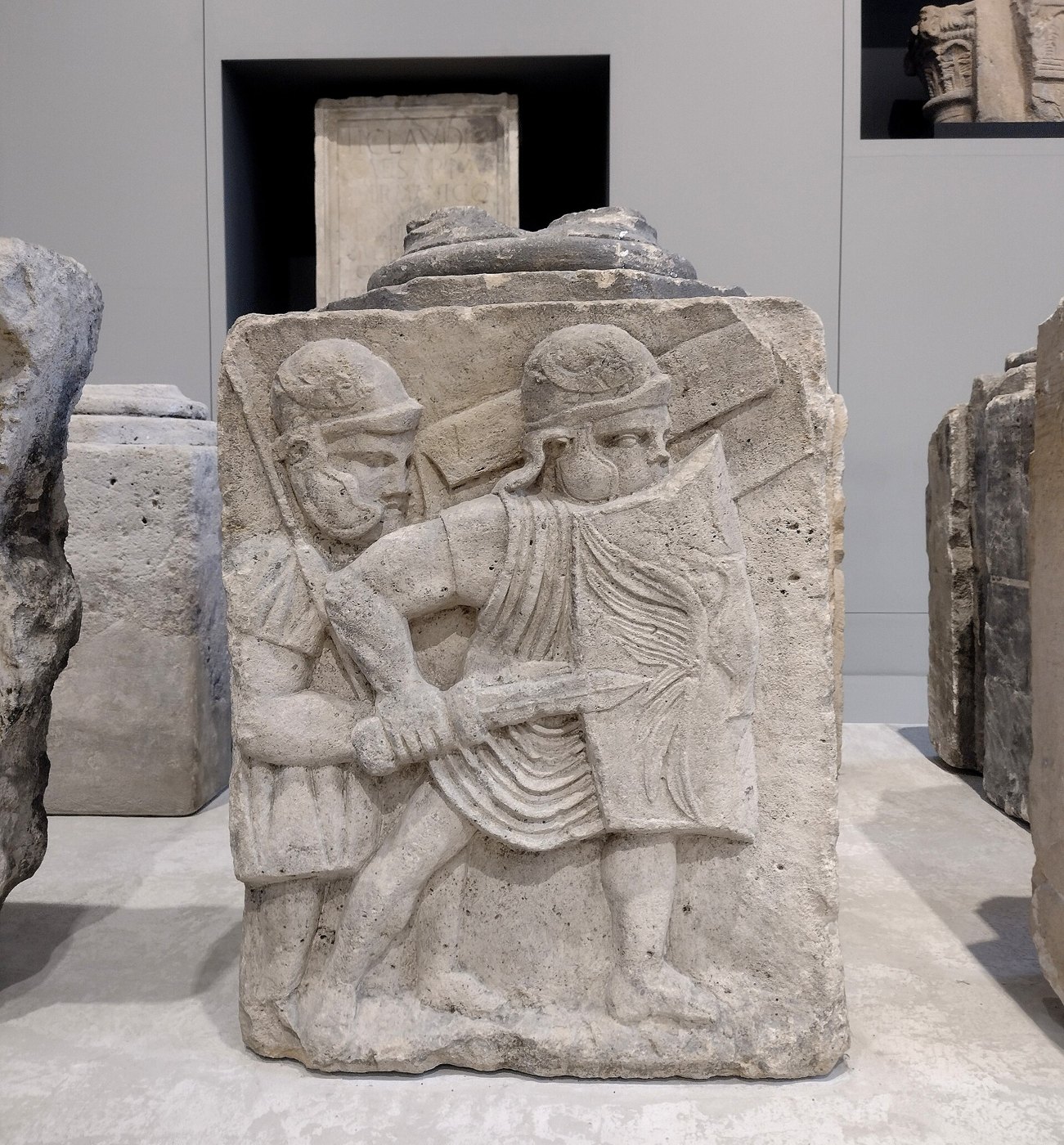
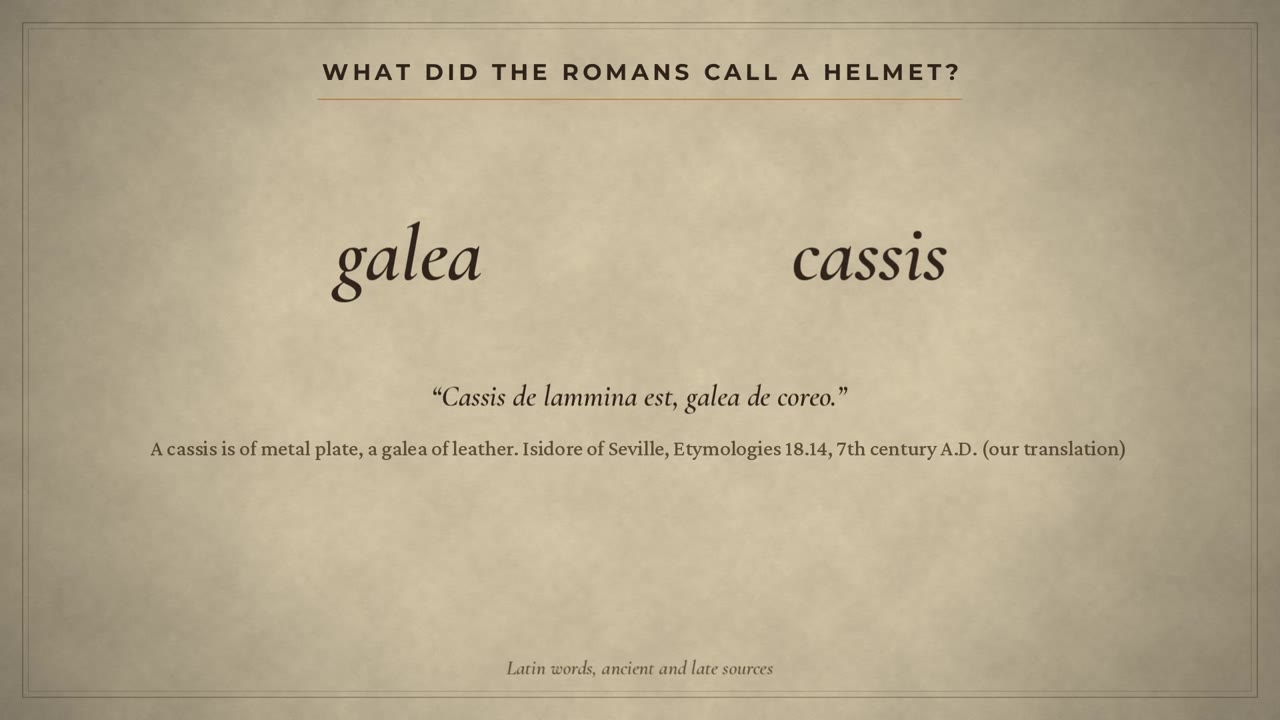
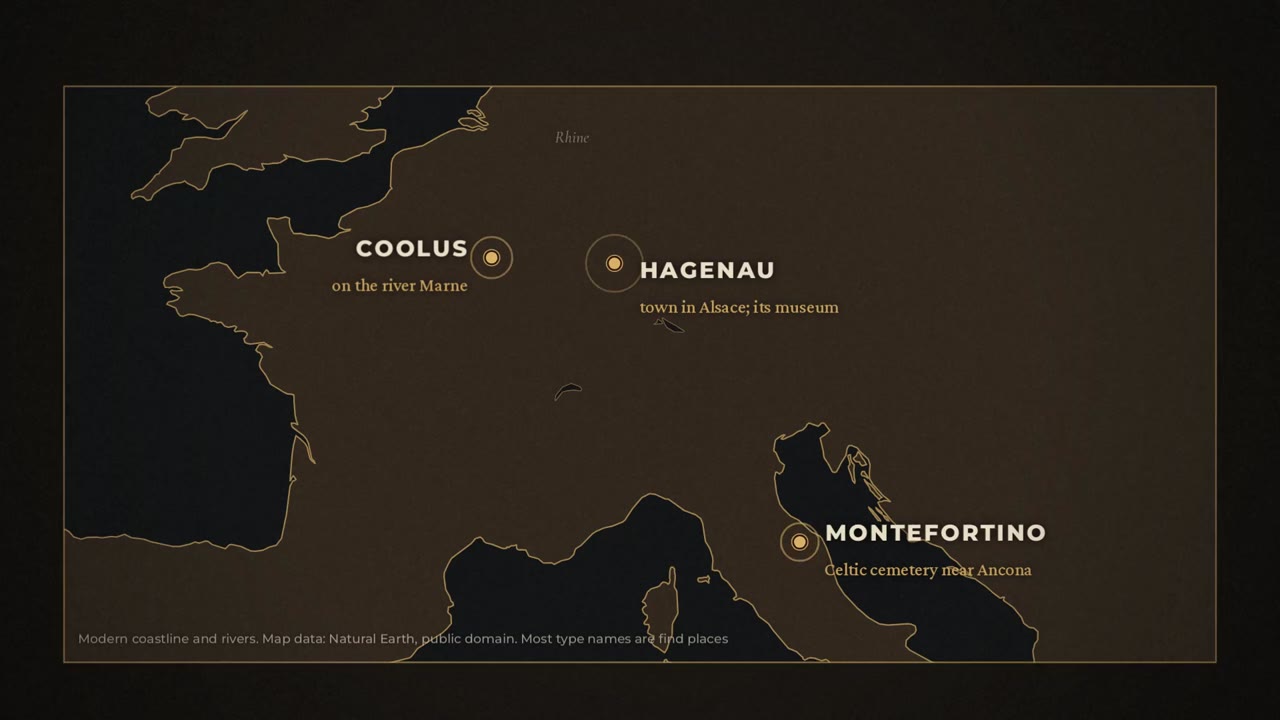
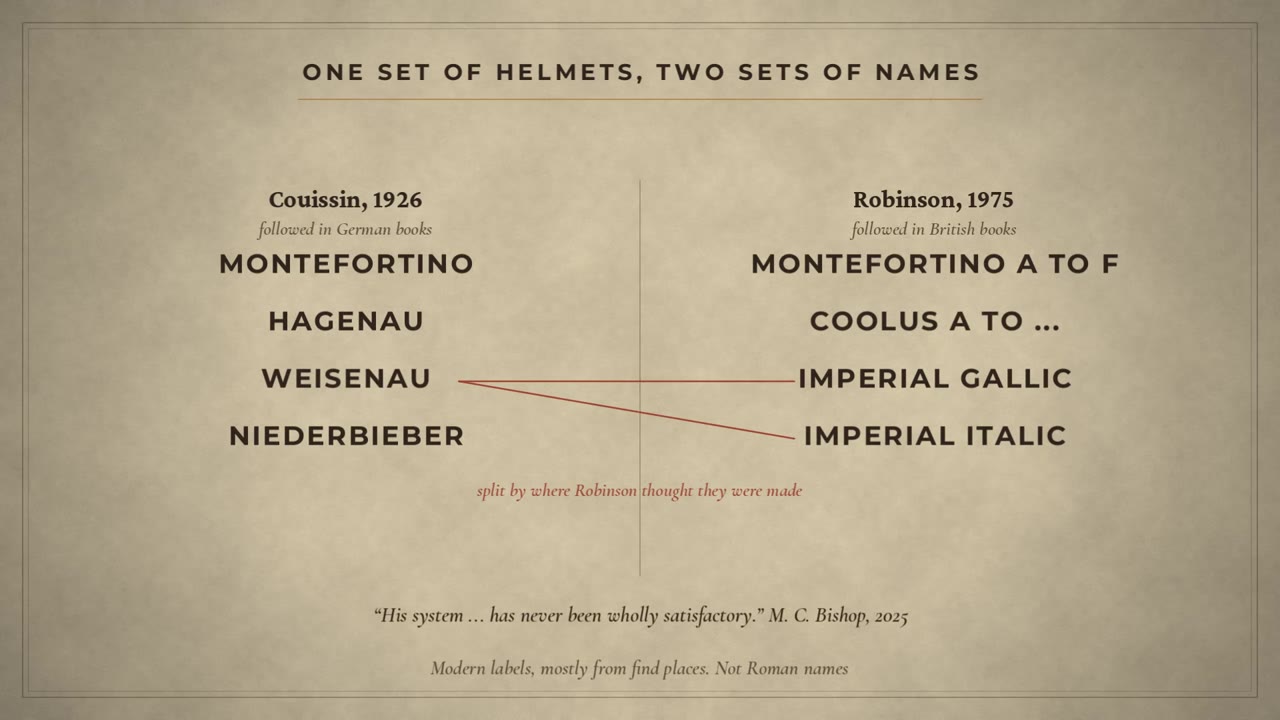
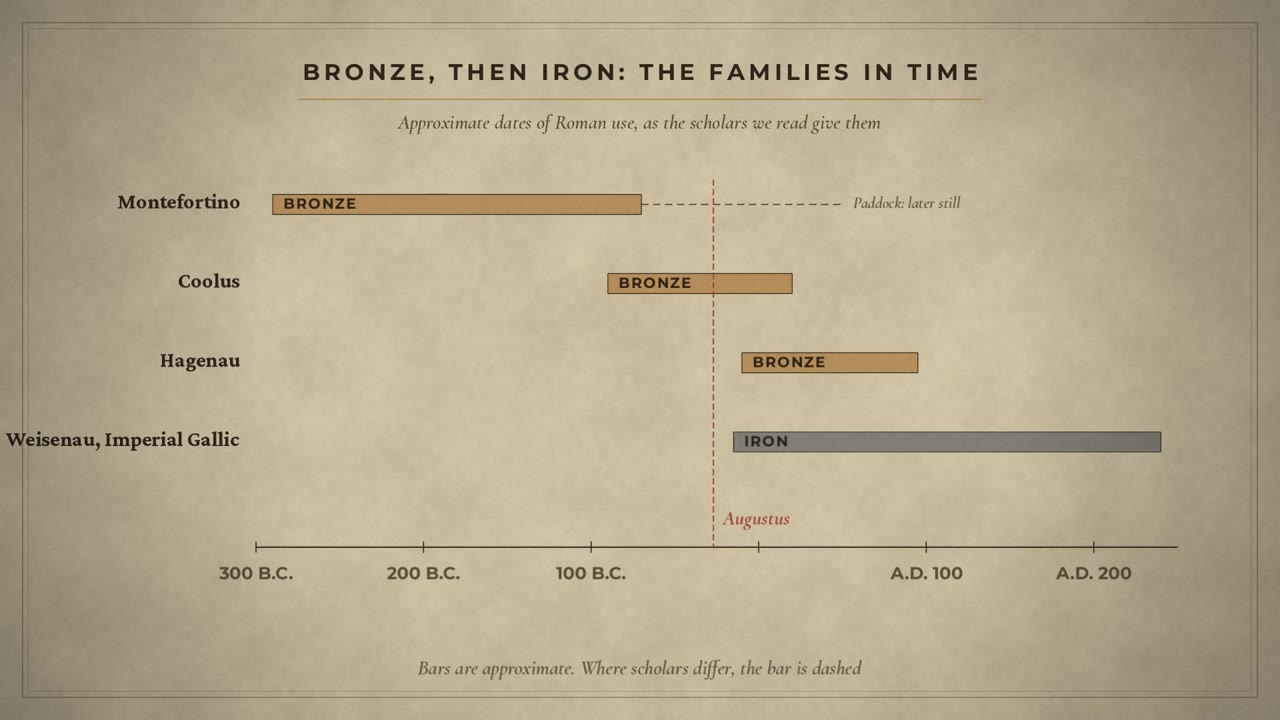
In Latin, a helmet was a galea, or a cassis. A writer of the seventh century A.D., Isidore of Seville, says the cassis was made of metal plate, and the galea of leather. But Roman writers call bronze helmets galea too. The names in museums, Montefortino, Coolus, Hagenau, Weisenau, are modern. Most of them are places where helmets were found. Montefortino is a Celtic cemetery near Ancona, in Italy, dug in the 1890s. Coolus is on the river Marne, in France, where helmets of this kind were found, one of them dredged from the river. Hagenau is a town in Alsace whose museum holds a helmet from the Rhine. Weisenau is a district of Mainz. The scholar Couissin sorted most of them in 1926. In 1975 the British armour expert Russell Robinson made a scheme of his own, with lettered sub-types. He split the iron helmets into Imperial Gallic and Imperial Italic, after where he thought they were made. German books mostly call the same helmets Weisenau. The archaeologist Mike Bishop says Robinson's system has never been wholly satisfactory. So: useful labels. But they are ours, not Rome's.
Montefortino: the oldest family
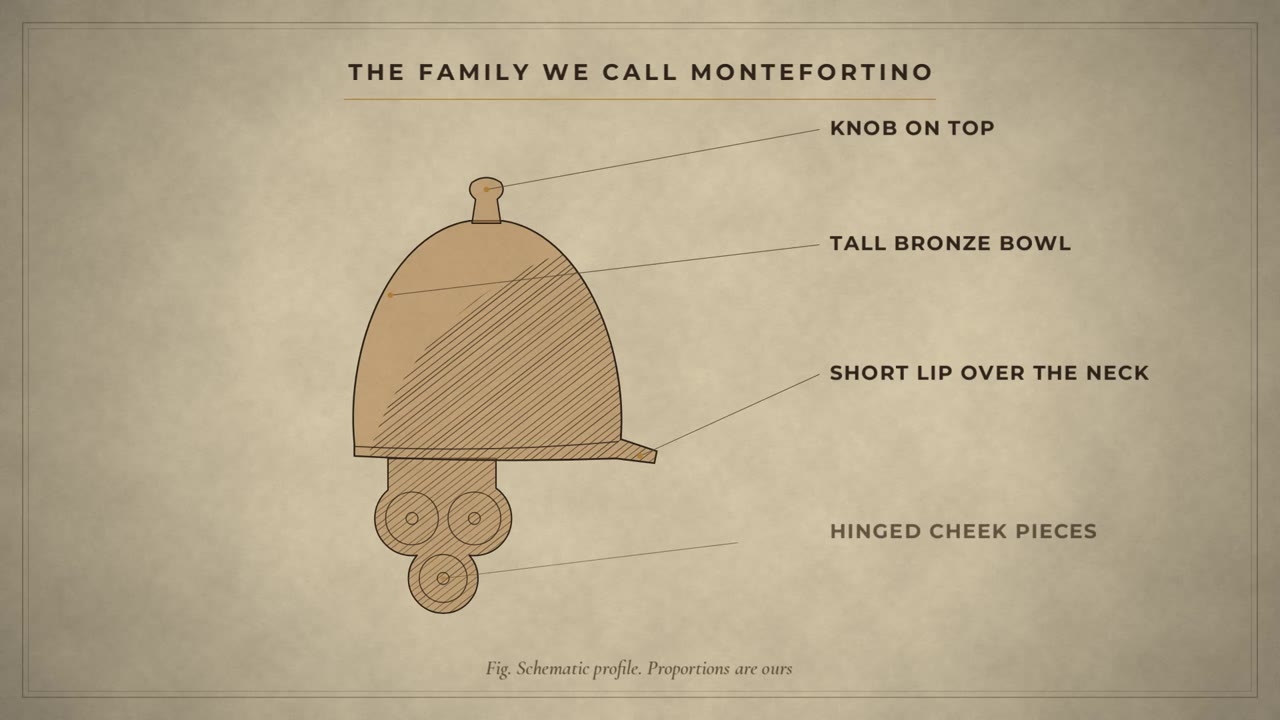
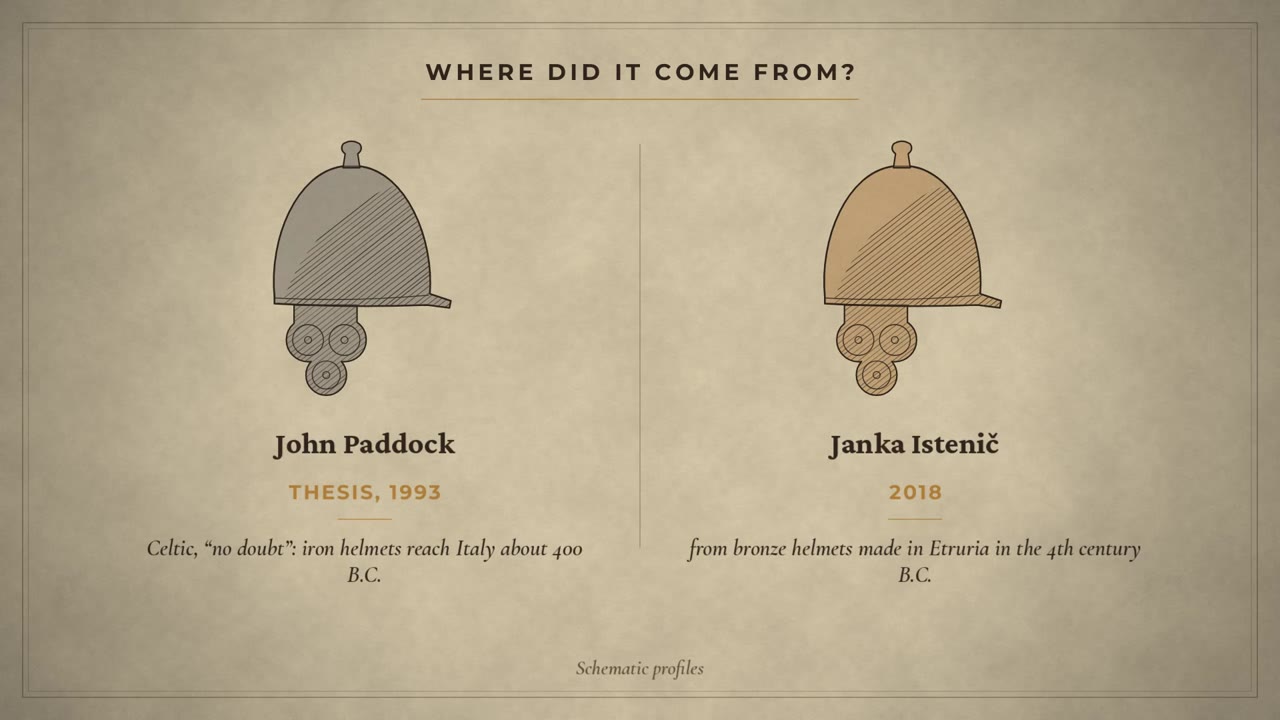
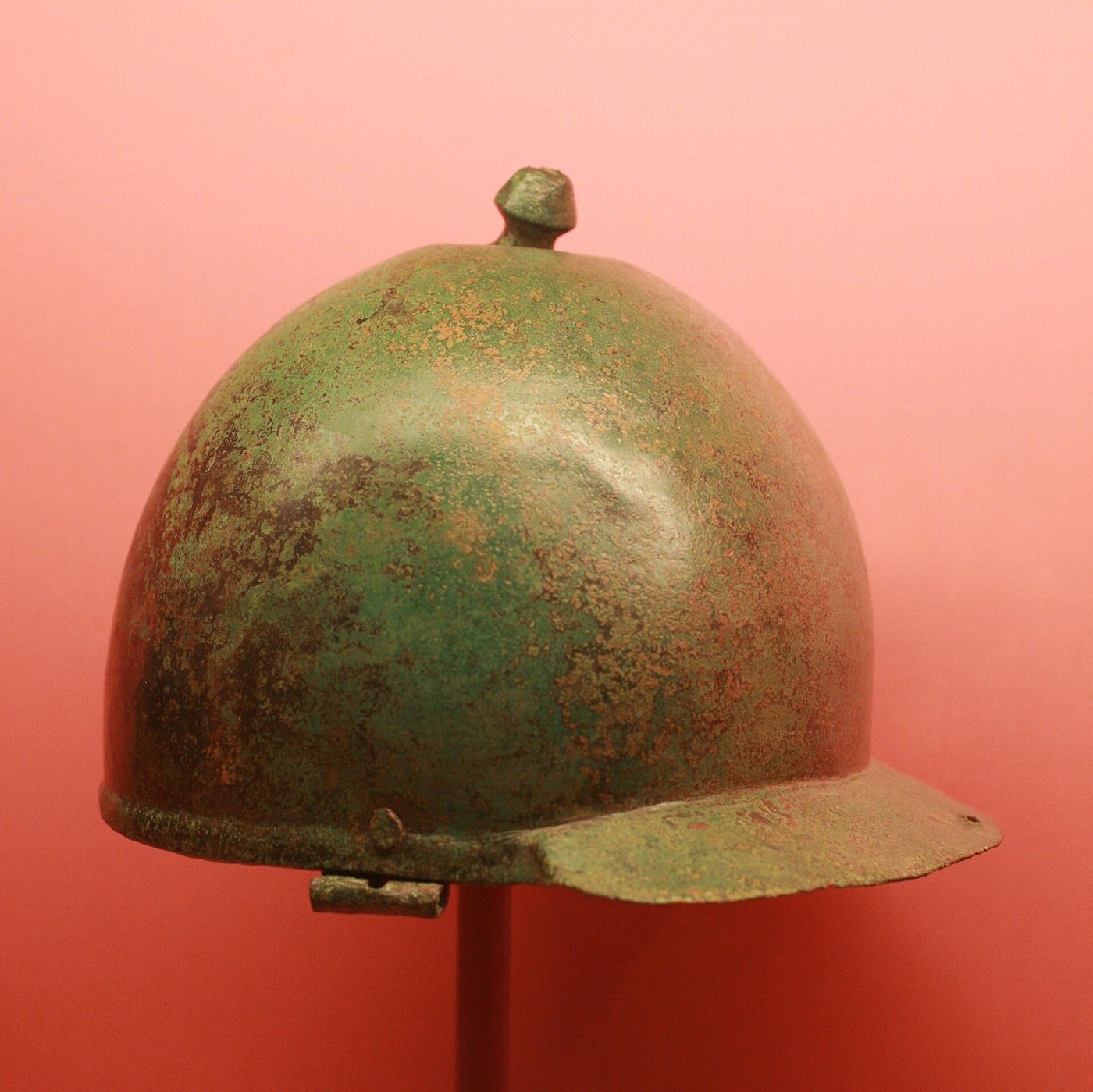
The oldest family is the one we call Montefortino. A tall bronze bowl, a knob on top, a short lip at the back over the neck, and hinged plates for the cheeks. Where did it come from? Here scholars disagree. John Paddock, who wrote his doctoral thesis on these helmets, says there can be no doubt it came from the Celts, whose iron helmets reached Italy around 400 B.C. Janka Istenič, who published the finds from Slovenia, traces it to bronze helmets made in Etruria in the fourth century B.C. Either way, by the third century B.C., Roman soldiers were wearing it. And here we have a witness. Polybius, a Greek who lived in Rome in the second century B.C., says the heavy infantry wear a bronze helmet. On top, a circle of feathers, with three upright purple or black feathers, about a cubit tall. That is about 45 centimetres. Why? In Paton's translation: to make every man look twice his real height.
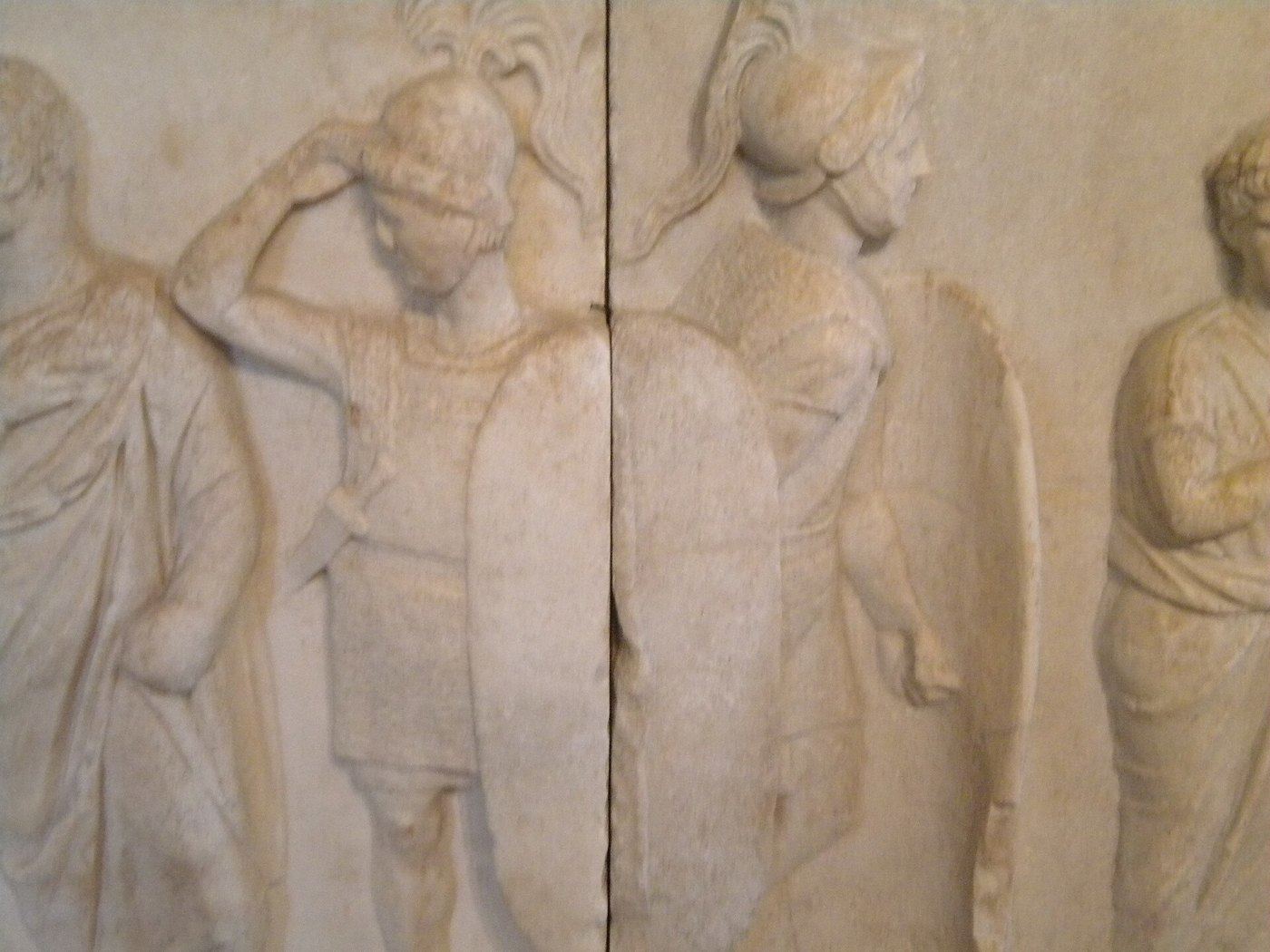
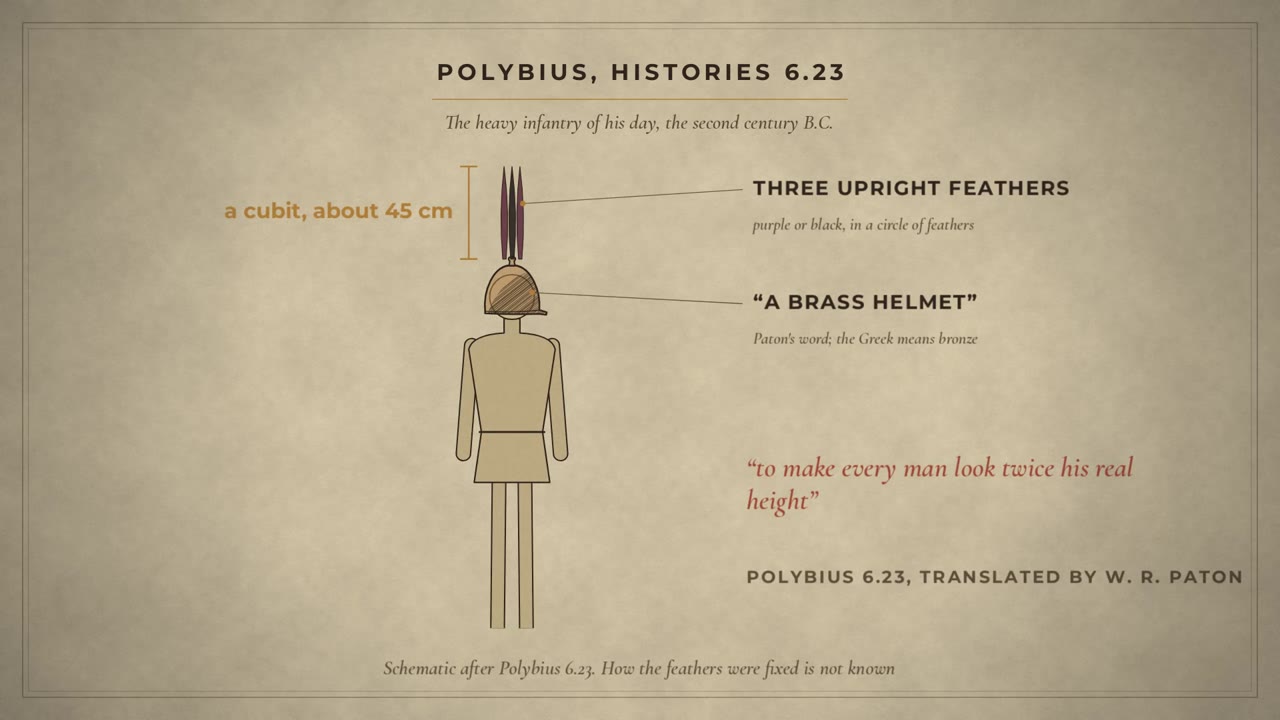
Did you know? Polybius says the hastati wore three upright feathers about a cubit tall, to make every man look twice his real height (Polybius 6.23, translated by W. R. Paton).
Mass production, and a helmet from Sisak
About 150 of these helmets survive, Paddock counted. A study from 2021 says about 200. And the late ones look rushed. Paddock describes hammer marks left rough, one rivet where there used to be two, and knobs made separately and soldered on, some of them off-centre. He links that to the time of the army reforms credited to Marius, and to arming men in bulk. Ivan Radman-Livaja thinks the state may have started equipping soldiers earlier. One of these late helmets was dredged from the river Kupa, near Sisak in Croatia. Its bronze is hardly ever more than a millimetre thick, and it weighs 450 grams. Other helmets of the period weigh up to about 1.2 kilos. It seems to have taken a hard blow on the top. The damage was patched with lead, and the broken knob replaced by a clumsy new one. Perhaps in the field, says Radman-Livaja, conceivably by the owner himself. Who he was, we don't know.
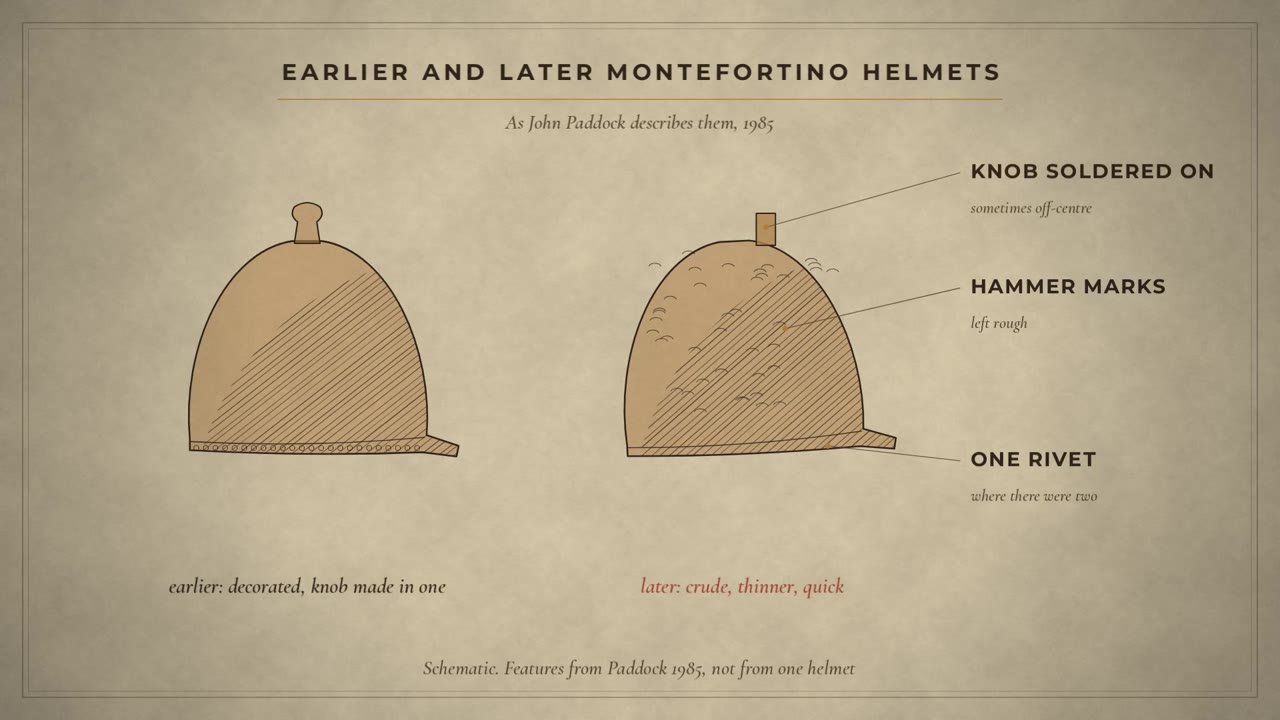
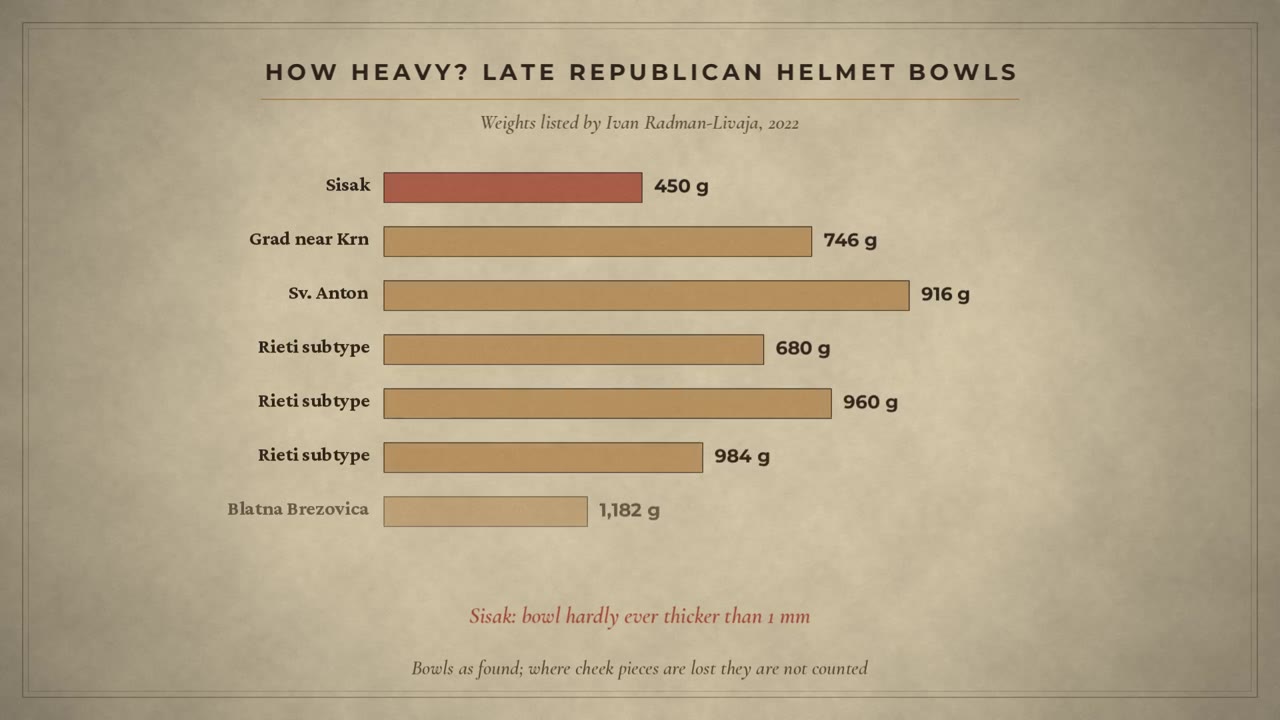
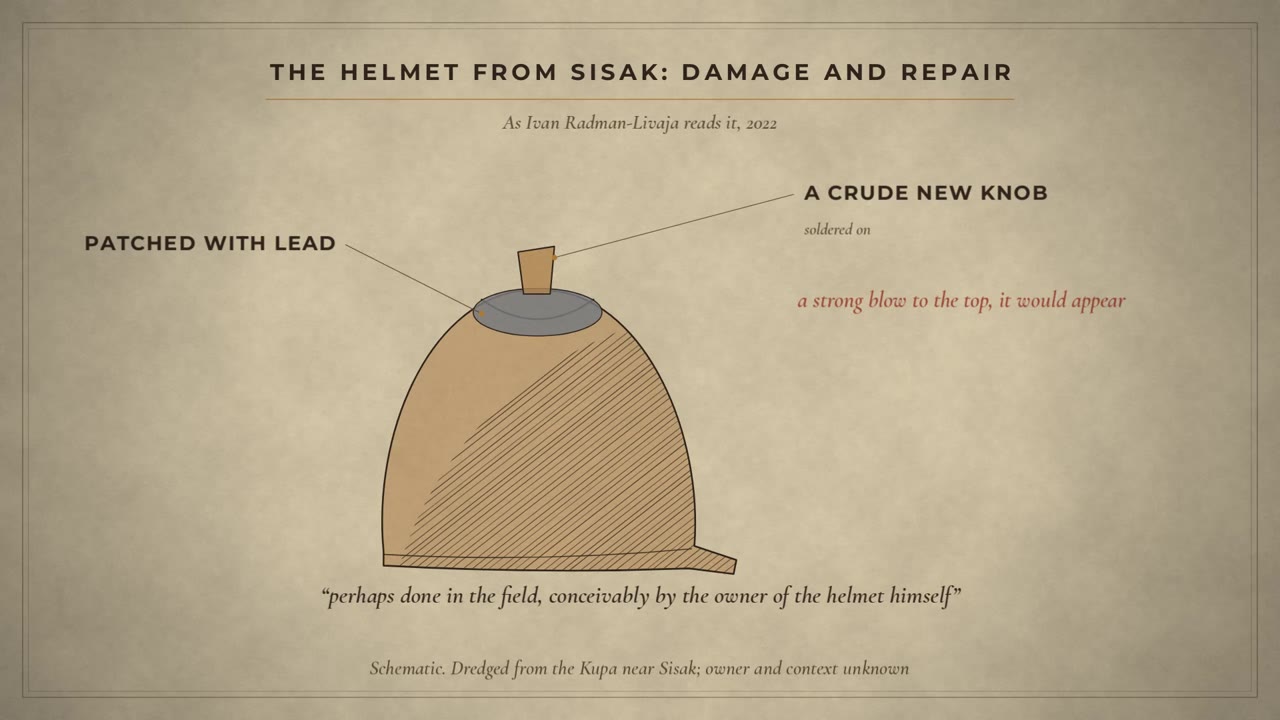
Did you know? A Republican helmet dredged from the Kupa at Sisak weighs only 450 grams. It seems to have taken a heavy blow to the top and was patched with lead and given a clumsy new knob, perhaps in the field, perhaps by its owner (Radman-Livaja 2022).
Coolus: the Gallic cap
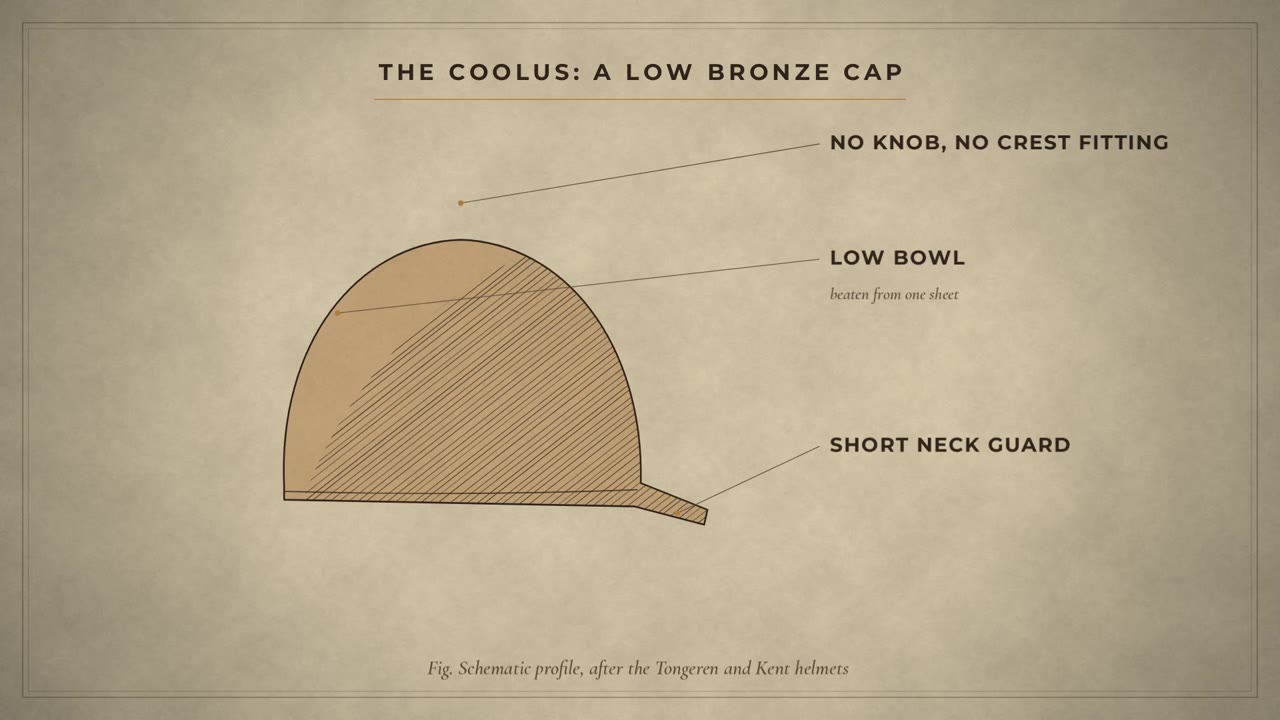
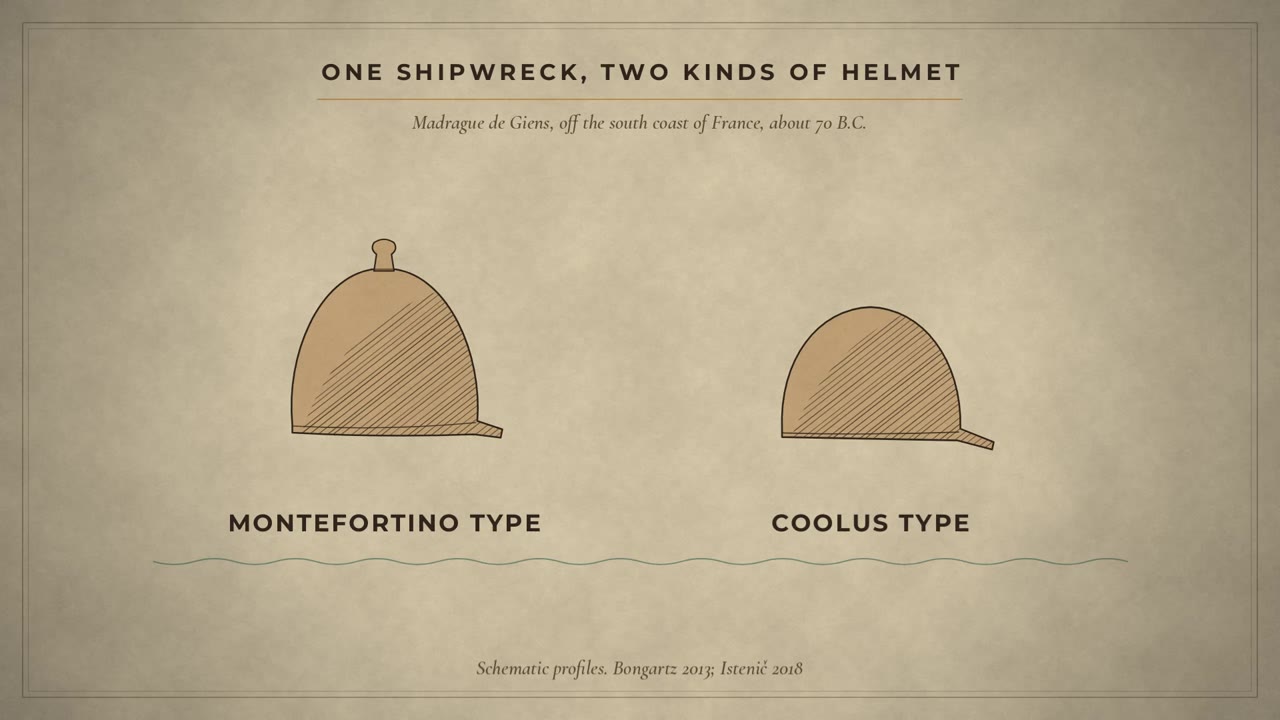
Next, the Coolus. A low, round bronze cap with a short neck guard, and no knob at all. It is Celtic in origin, says Paddock. It appears in the third century B.C., and turns up with the Roman army only in the first century B.C. Was it ever made in Roman workshops? Still debated. Radman-Livaja thinks it safer to assume the Gauls made it, and that Caesar's troops used it to some extent. A ship that sank off the south coast of France around 70 B.C. carried both kinds: a Coolus and a Montefortino, in use side by side. So which helmets lay beside the trenches at the Sabis? We don't know. Many scholars think Caesar's men wore some like these in Gaul. And one Coolus helmet from England, from the middle of the first century B.C., had a very different end. It was set upside down in a pit, and the burnt bones of a human being were placed inside it. A helmet, used as an urn.
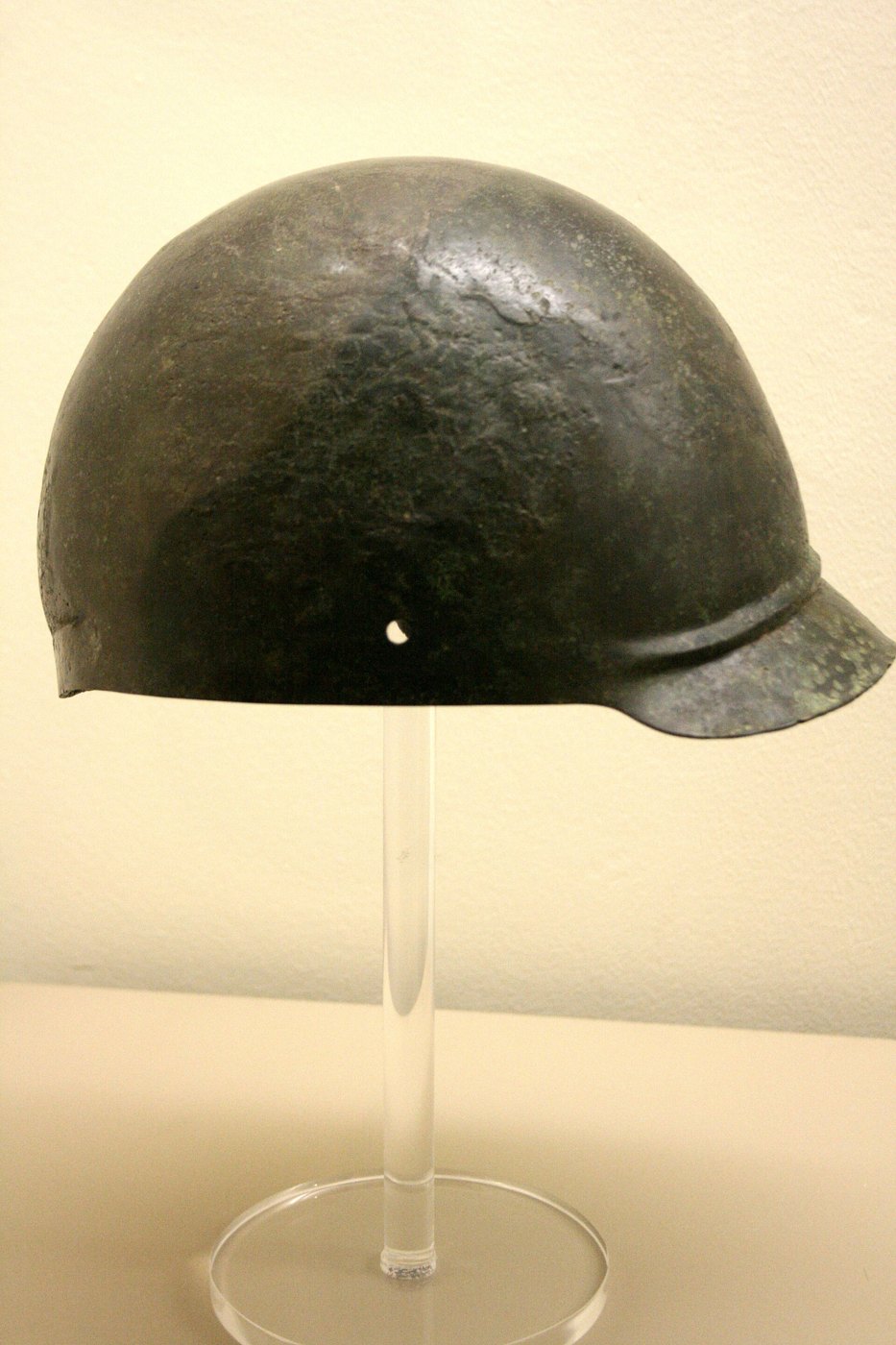
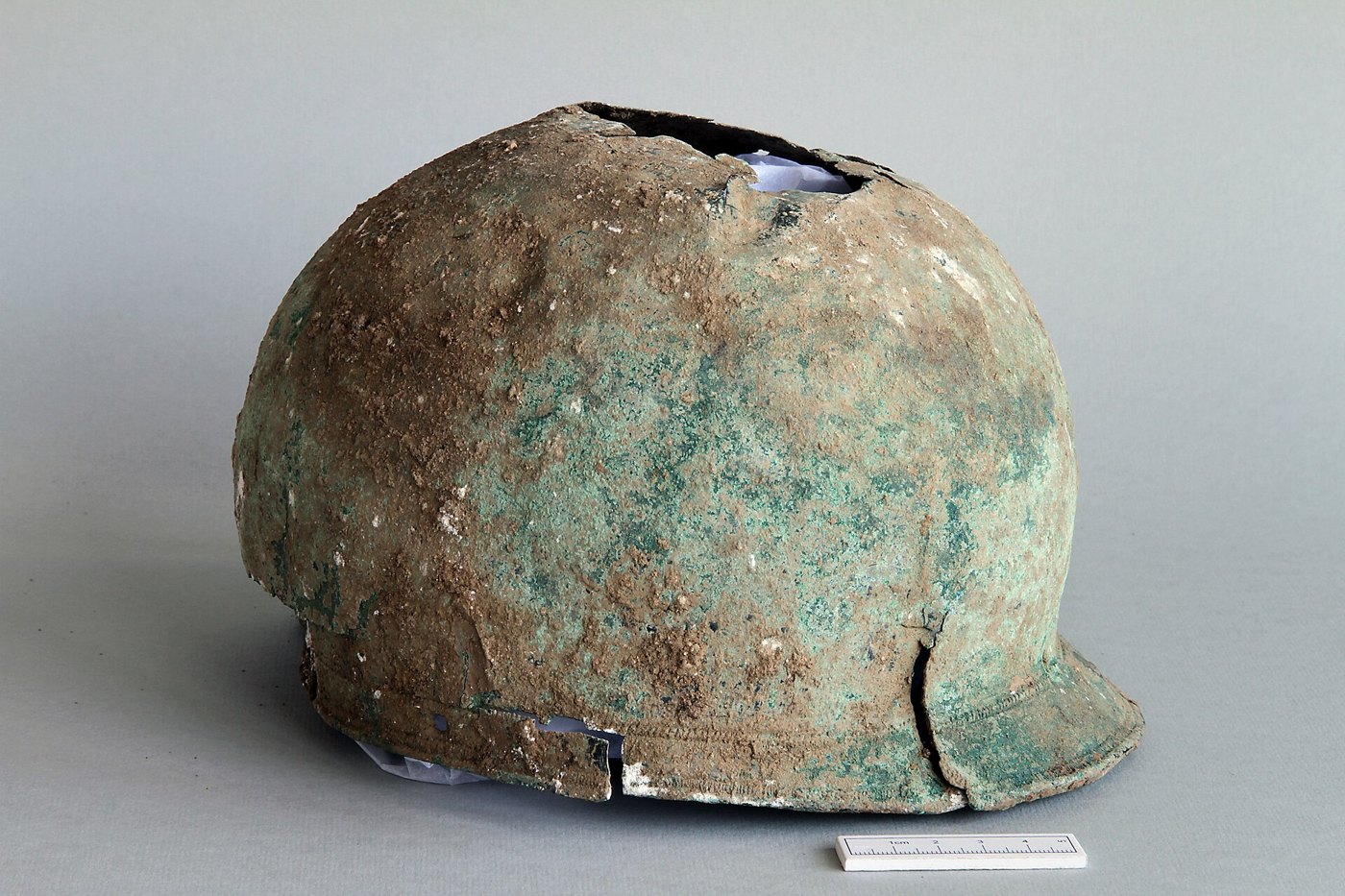
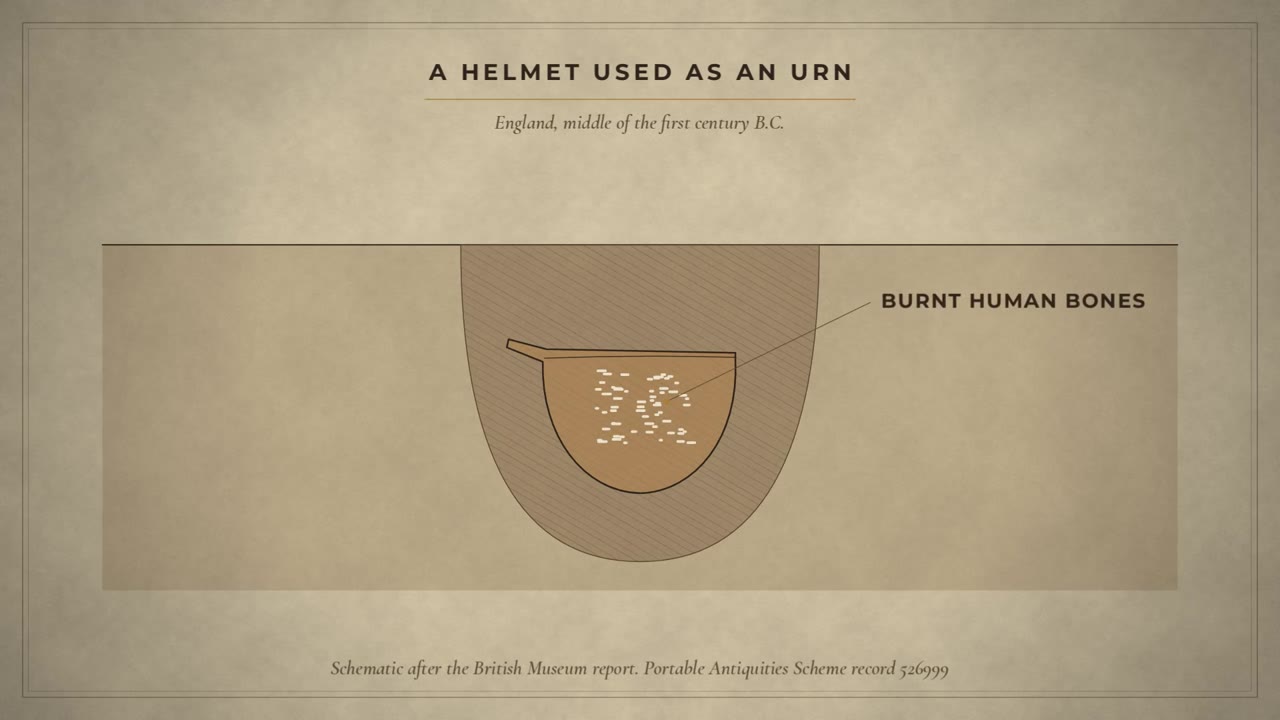
Did you know? A Coolus helmet of the mid-first century B.C. found in England was set upside down in a pit with the burnt bones of a human being placed inside: a helmet used as an urn (British Museum report, Portable Antiquities Scheme 526999).
Imperial Gallic: iron, eyebrows, neck guards
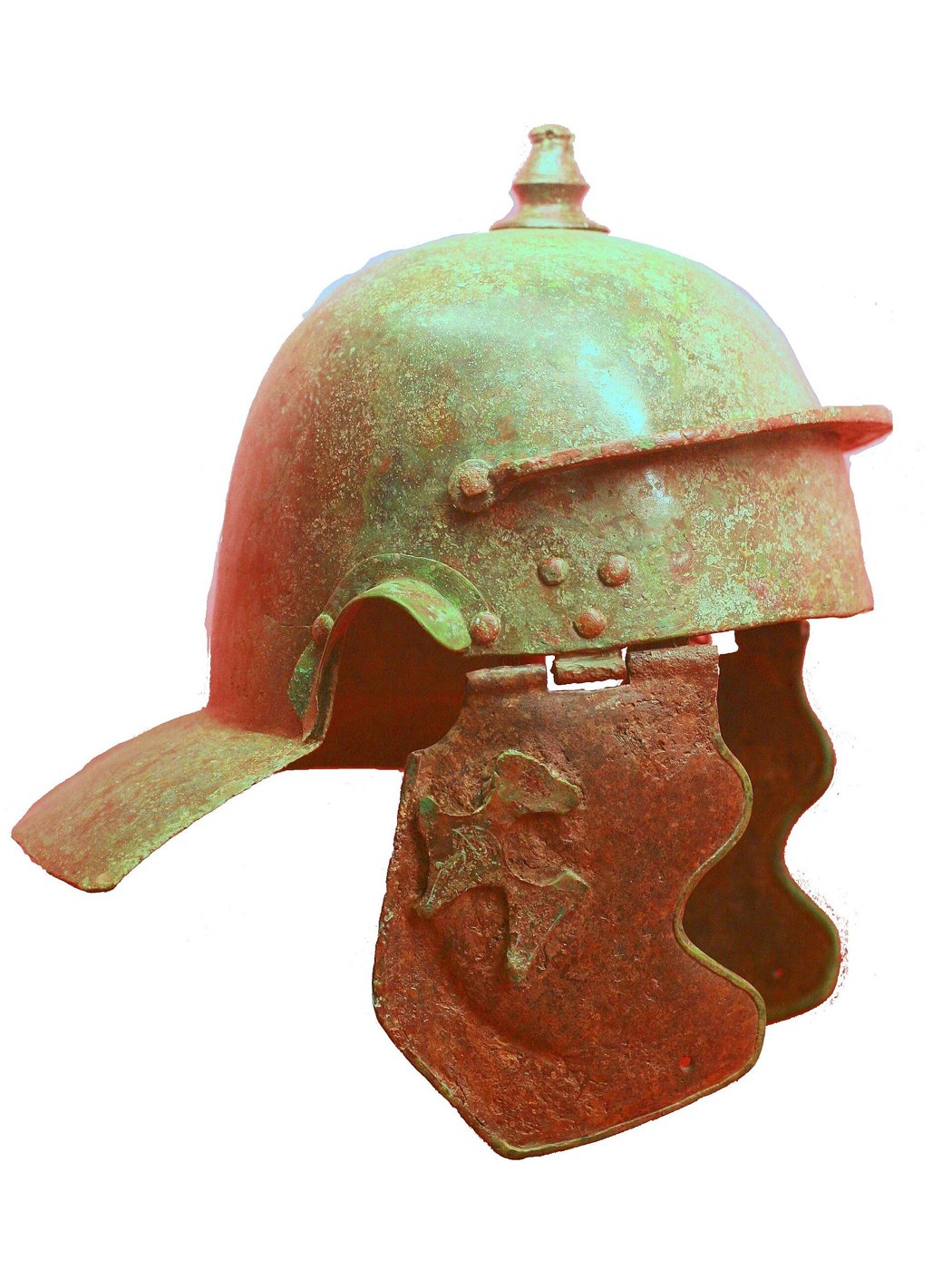
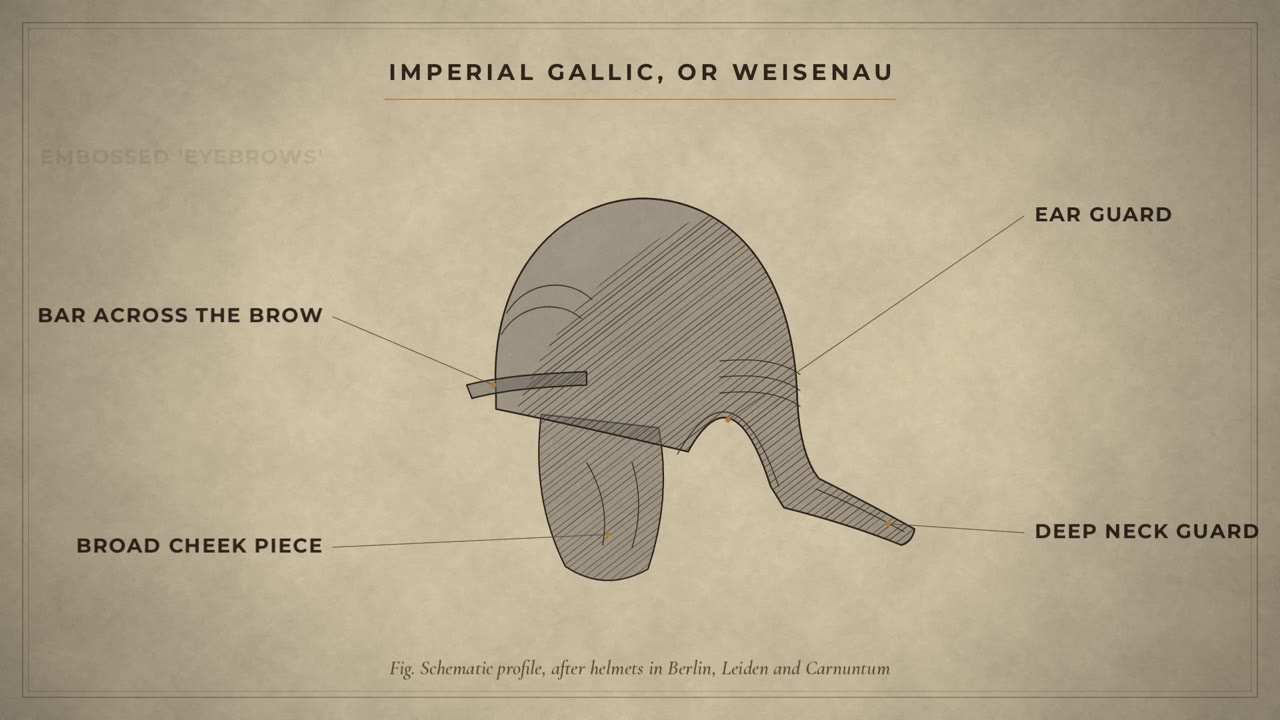
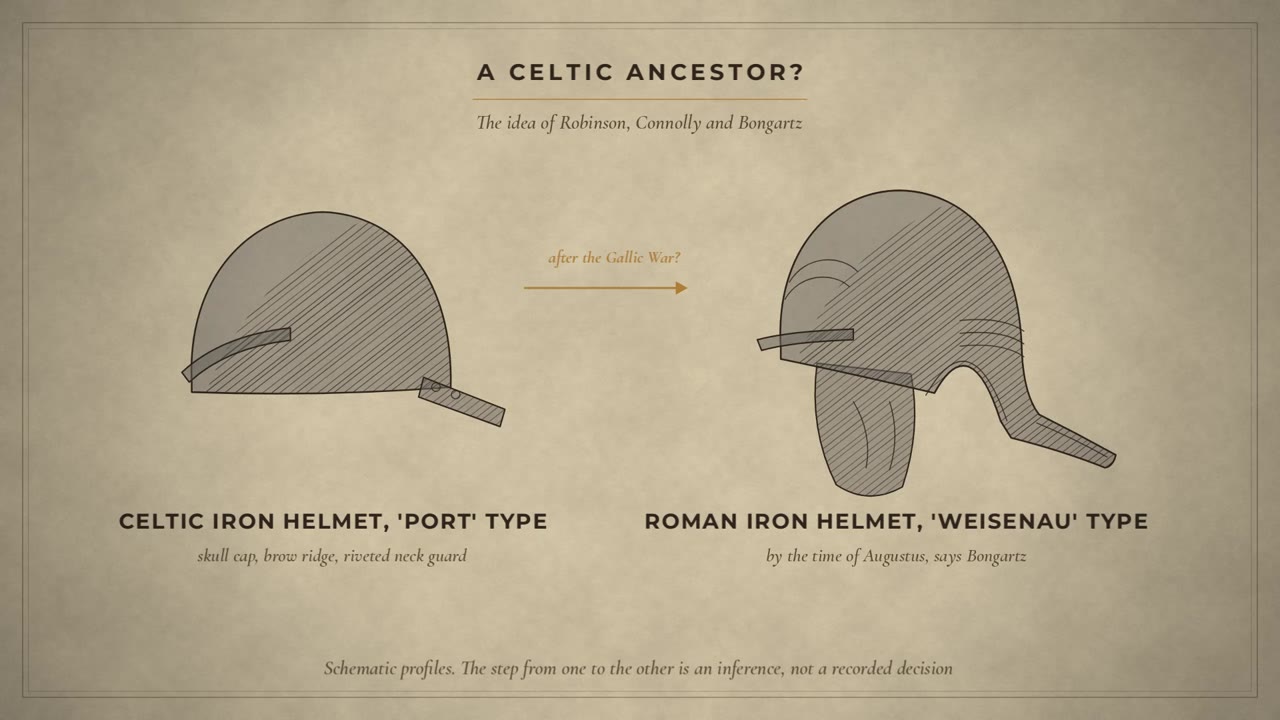
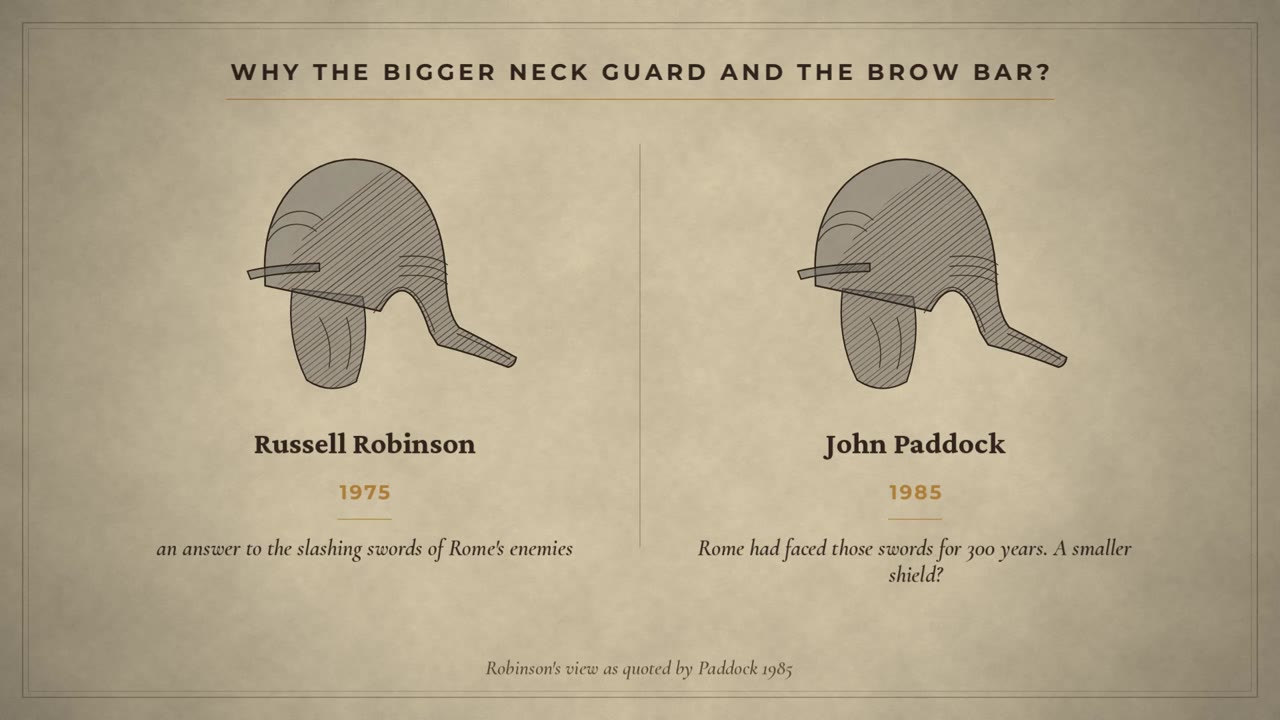
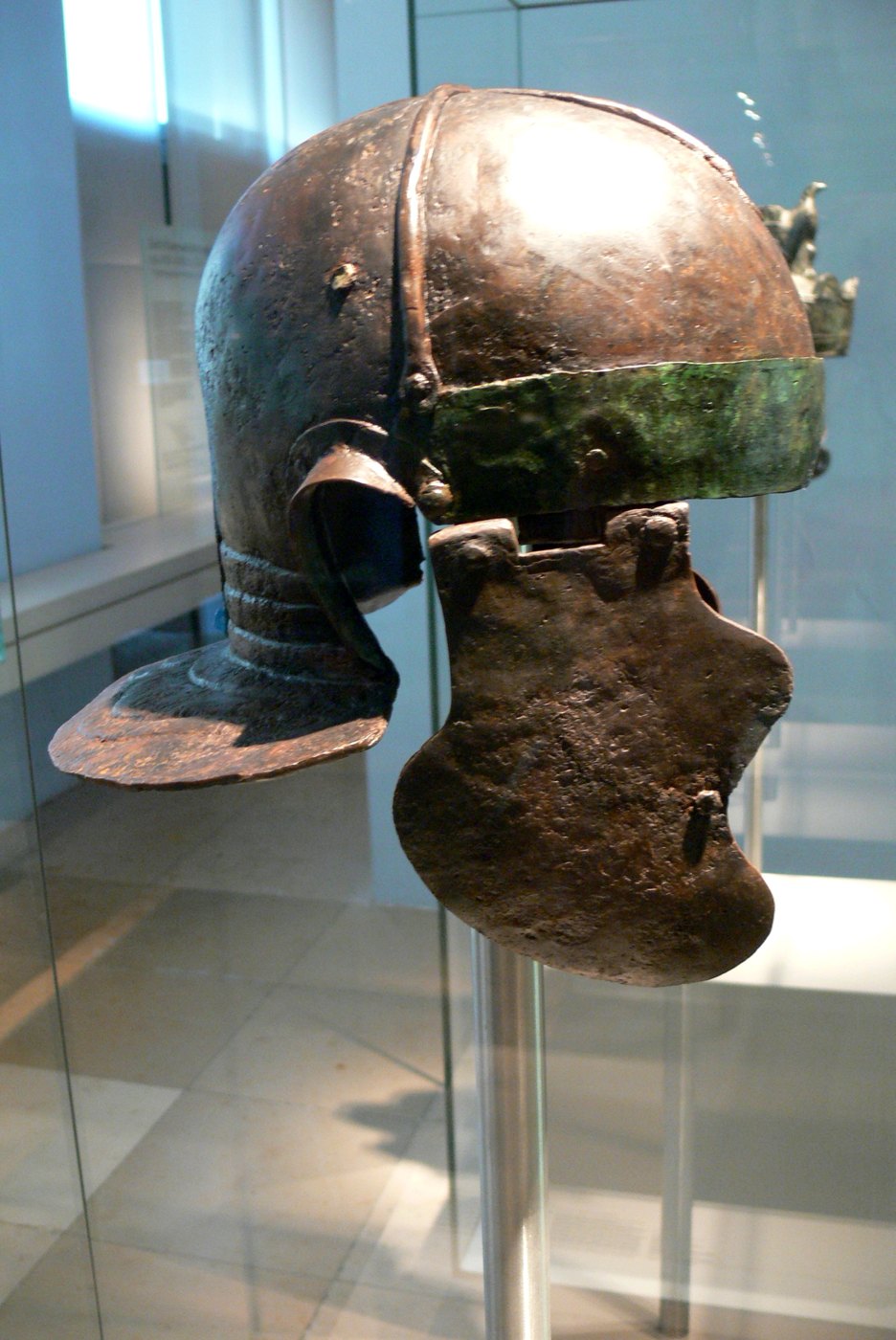
Then, under Augustus, the Romans begin to wear mostly iron helmets, alongside the bronze ones. A deep guard over the neck. A bar across the brow. Guards over the ears. Broad cheek pieces. And on the front, two curved ridges beaten into the metal, like eyebrows. Robinson pointed to Celtic iron helmets, of the kind found at Port, in Switzerland. Peter Connolly agreed that at least one early Roman helmet is clearly derived from them. Astrid Bongartz, in a doctoral thesis from Cologne, goes further: the Romans took the Celtic helmet over after what they saw in the Gallic War, and by the time of Augustus it had become the Weisenau type. Why the bigger neck guard, and the brow bar? Robinson saw an answer to the slashing swords of Rome's enemies. Paddock disagreed. Rome had been facing those swords for three hundred years. He wondered whether it had more to do with a smaller shield. The evidence does not settle it.
Names punched into a neck guard
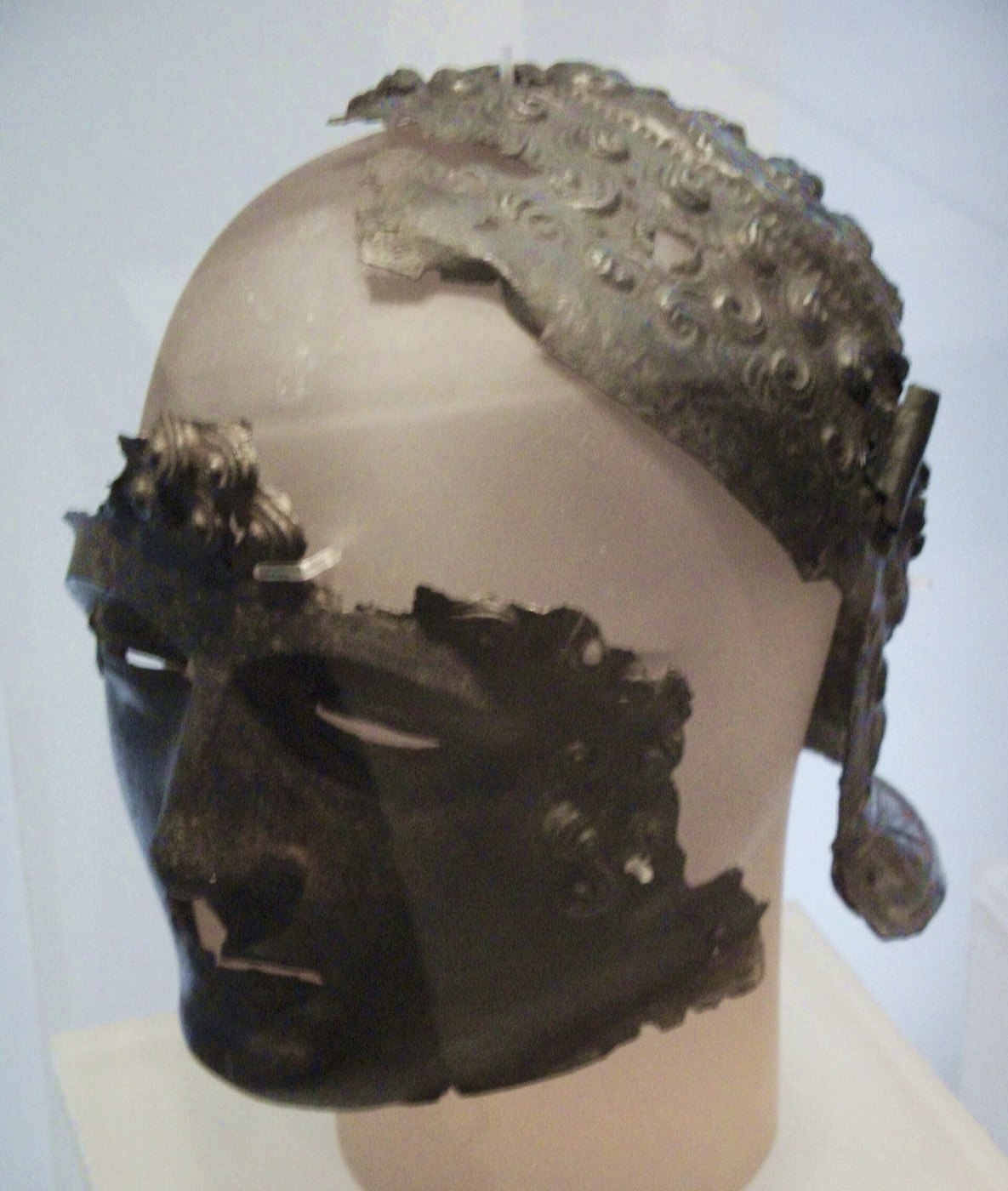
Now look closely at this neck guard. A bronze helmet of the Hagenau kind, dredged from the Rhine at Hönnepel, near Kalkar, in Germany. Punched into it, dot by dot, are names. The century of Amilisius: Tiberius Calventius. The century of Satrius: Publius Messius. A man of the seventh cohort. Eight inscriptions in all. From the way the names are written, it is dated before A.D. 30. Another, from the Thames or the Walbrook in London, now in the British Museum, carries the names of four owners, in at least two centuries, says the standard edition of Roman inscriptions from Britain. Why mark a helmet? Perhaps to get your own, well-fitting one back after weapons were handed in. Bongartz thinks it was not compulsory: each man decided for himself. Several names need not always mean several owners, she warns. But on the London helmet, the editors count four.
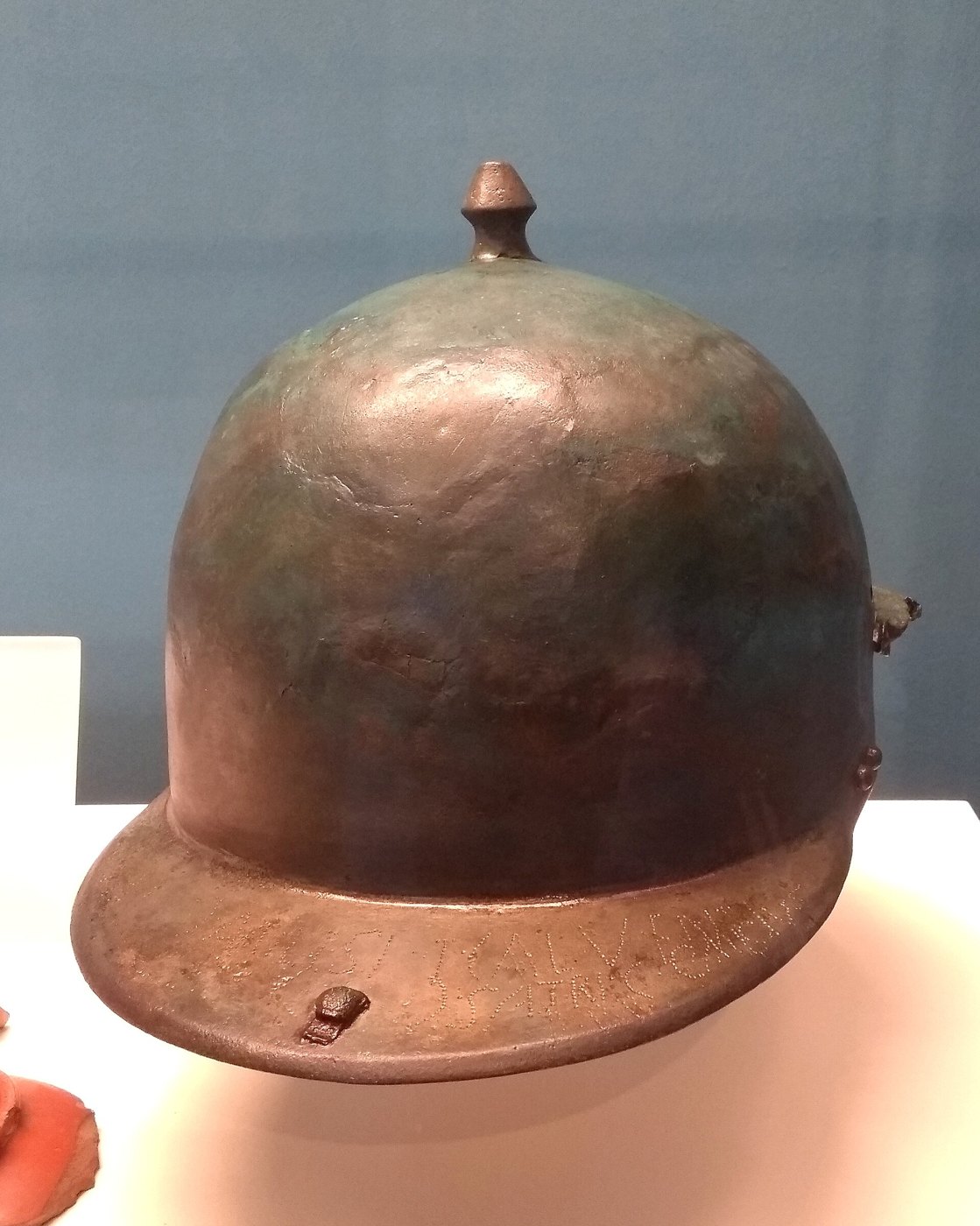
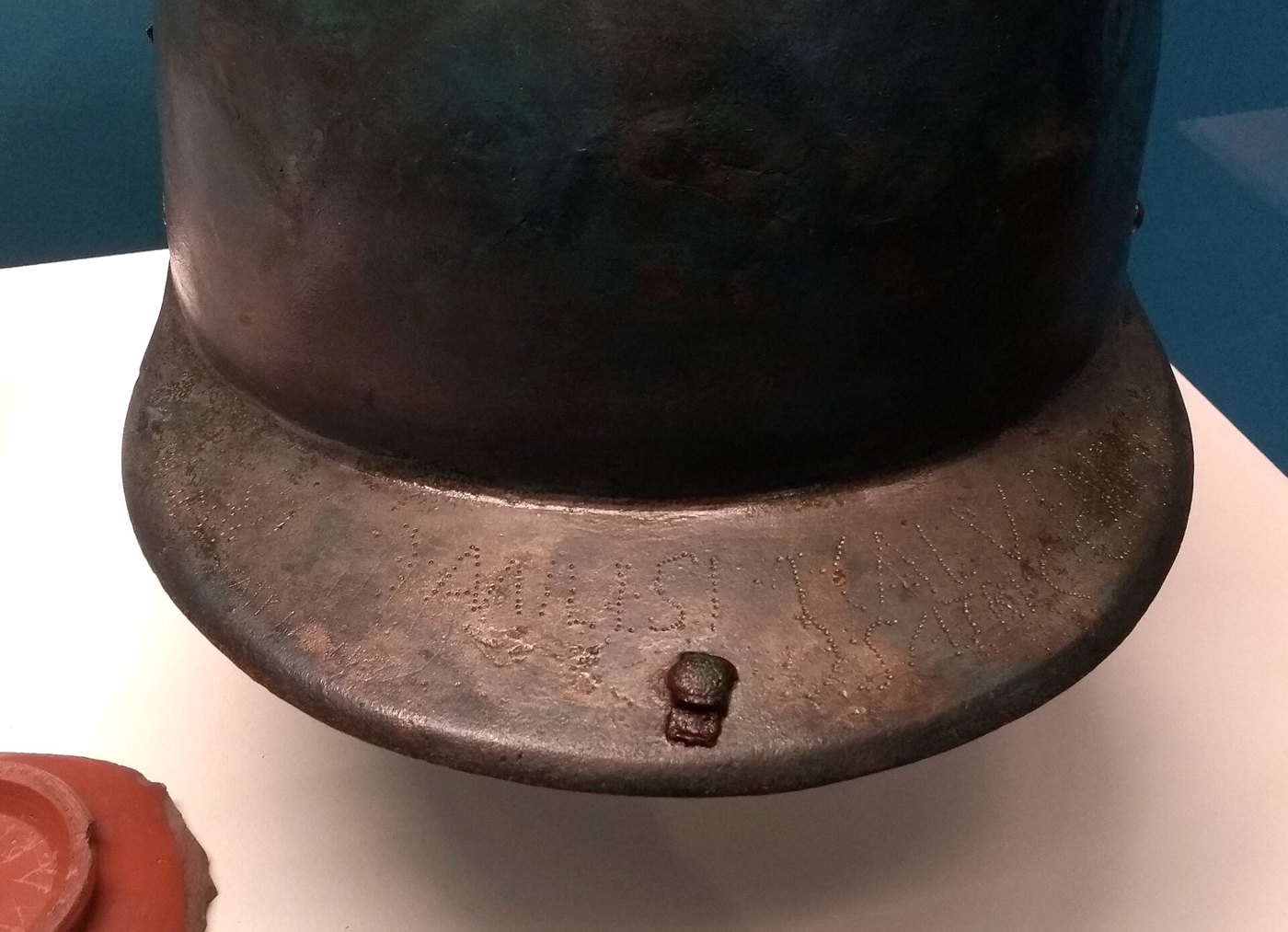
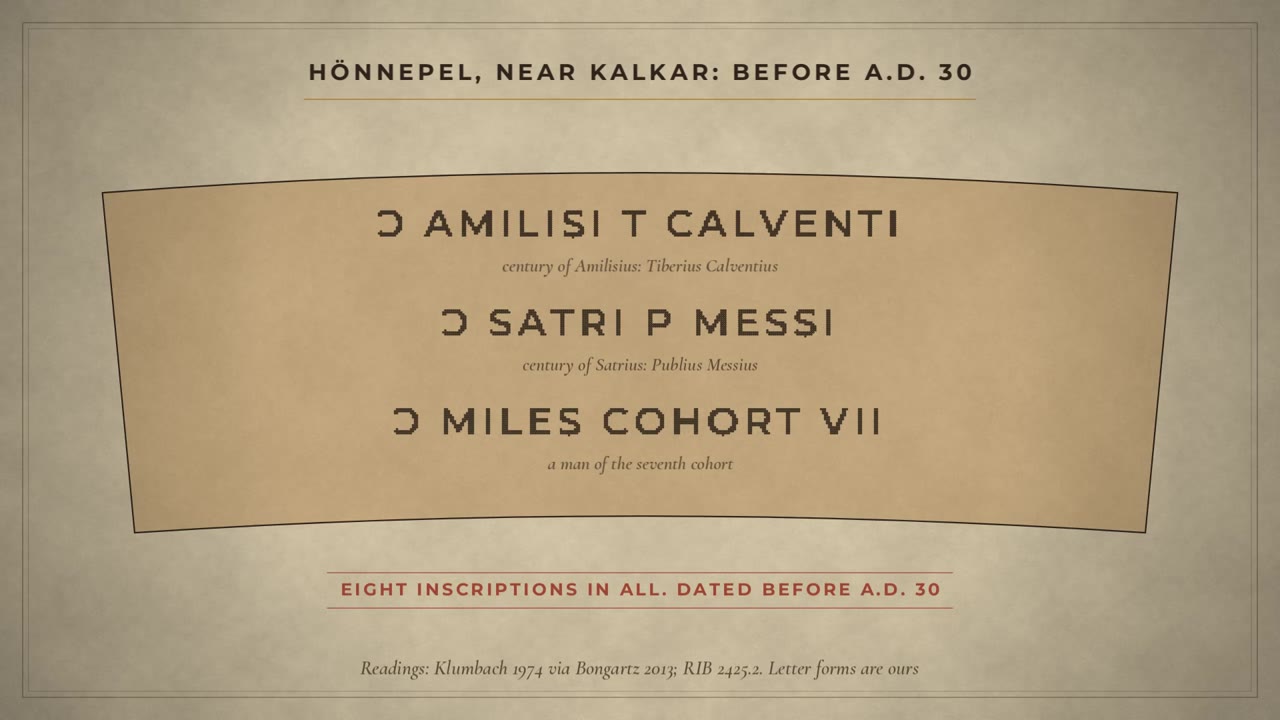
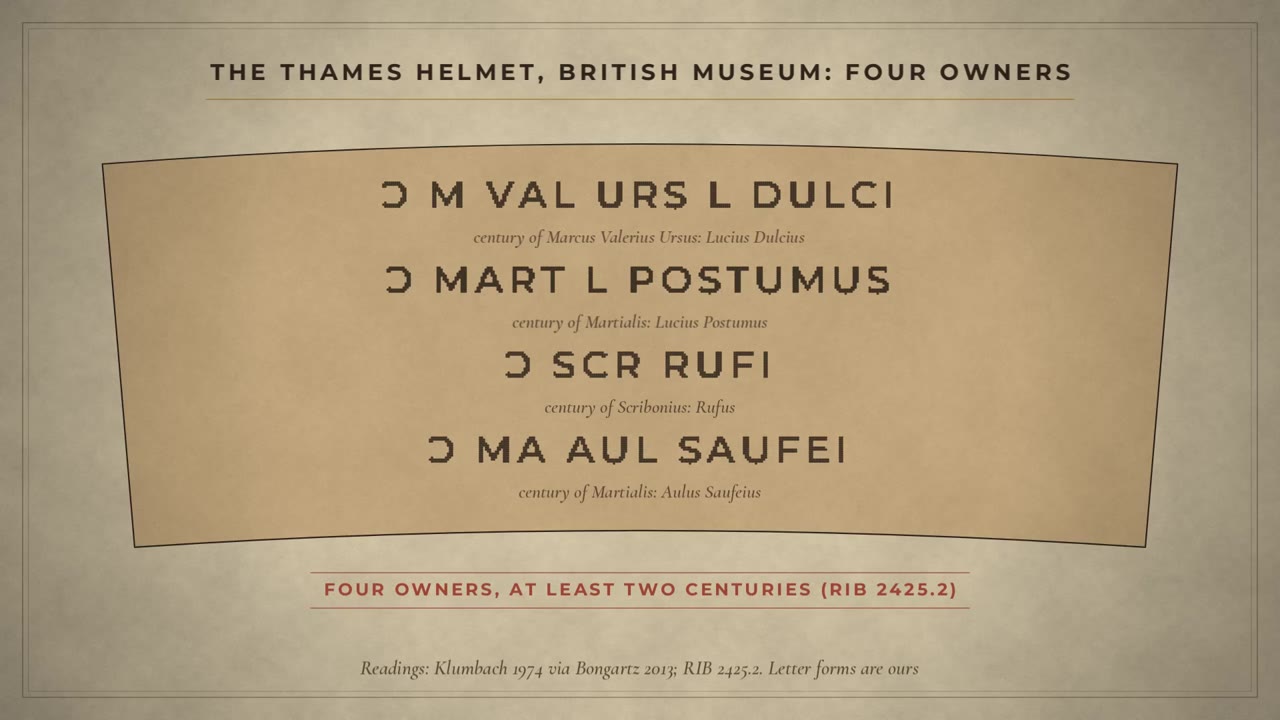
Did you know? Roman soldiers punched their names into their helmets. The Hoennepel helmet has eight inscriptions; the Thames helmet in the British Museum names four owners in at least two centuries.
What was inside
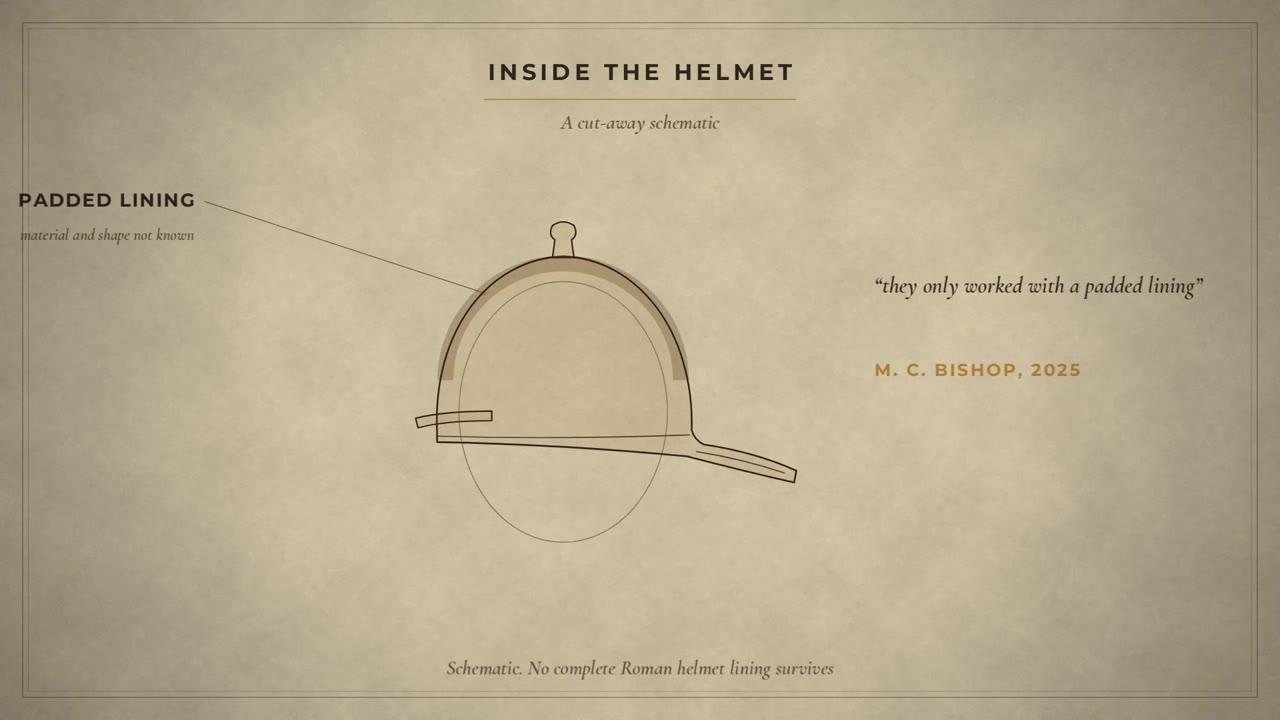
What was inside? A helmet only works with a padded lining, says Bishop. At Hod Hill, in Dorset, the hill fort from our scorpion episode, part of a helmet from the first century A.D. carries traces of coarse woven fabric, probably linen. At Newstead, in Scotland, James Curle found thick padding inside an iron cavalry helmet with a face mask. It seemed to be wool, fastened to the metal with a resinous substance that went sticky in hot water. Leather too? Paddock rejects it. Bongartz will not rule it out. What shape the linings took, nobody knows.
Bars across the top
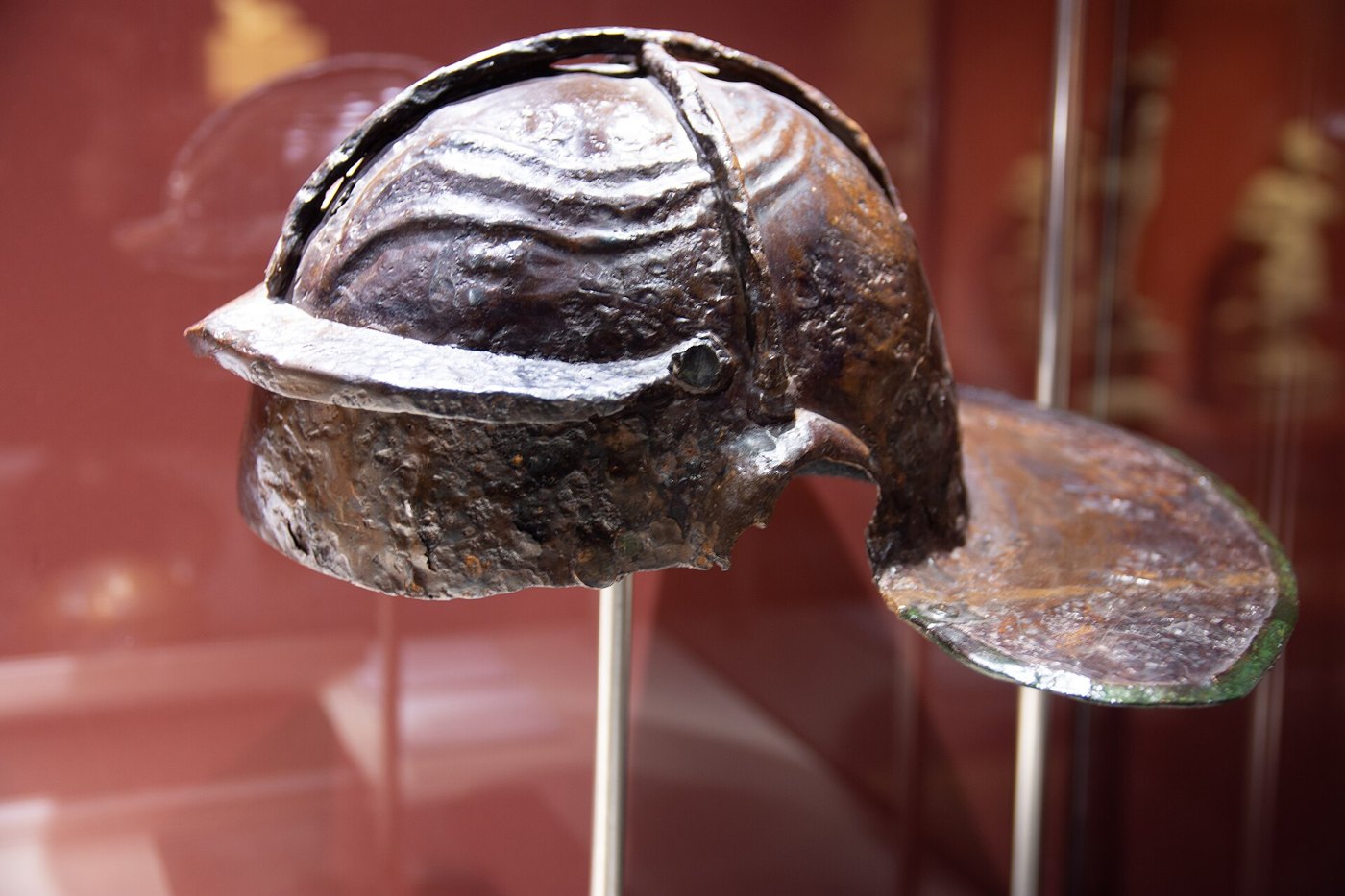
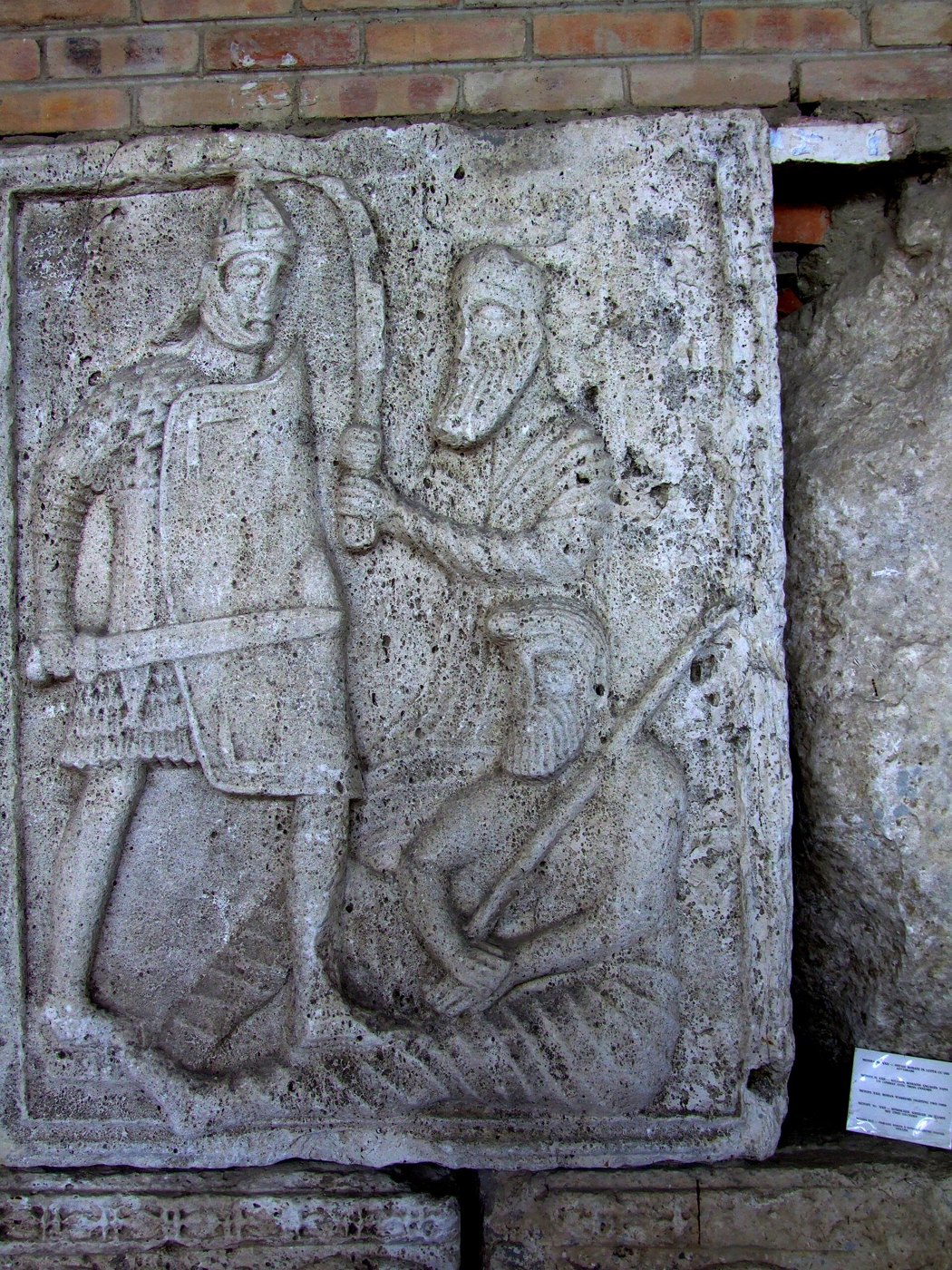
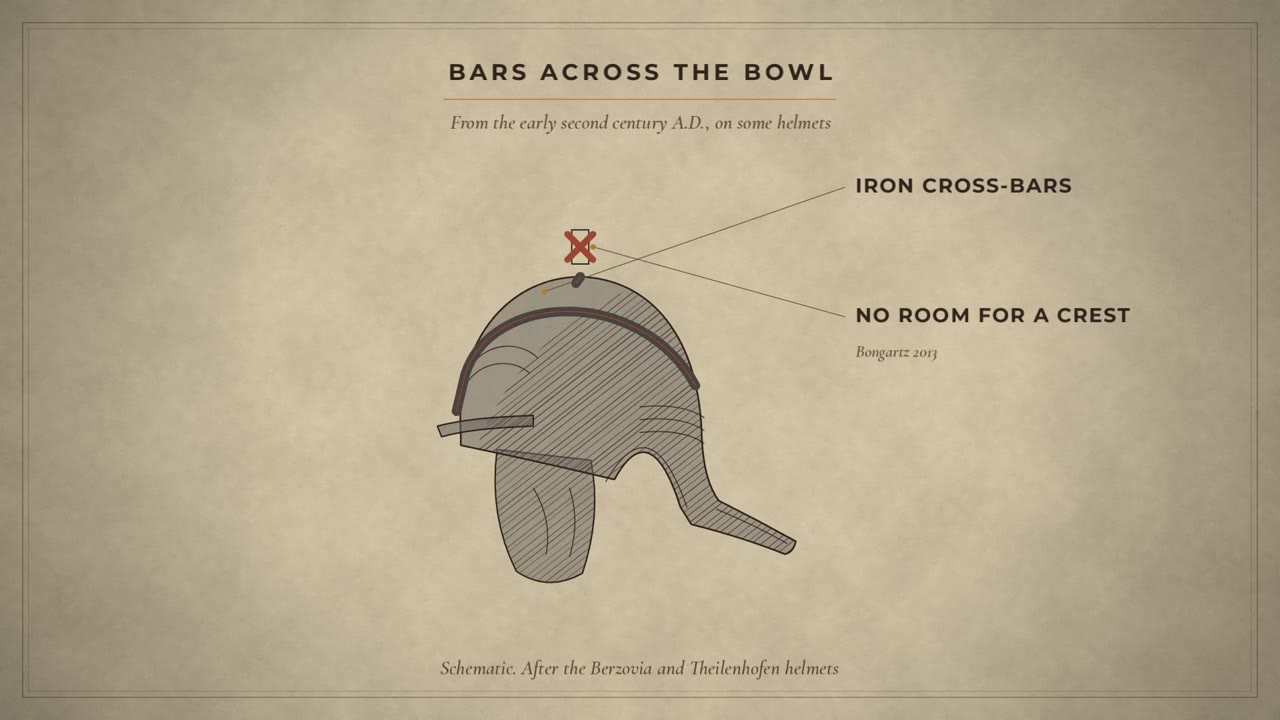
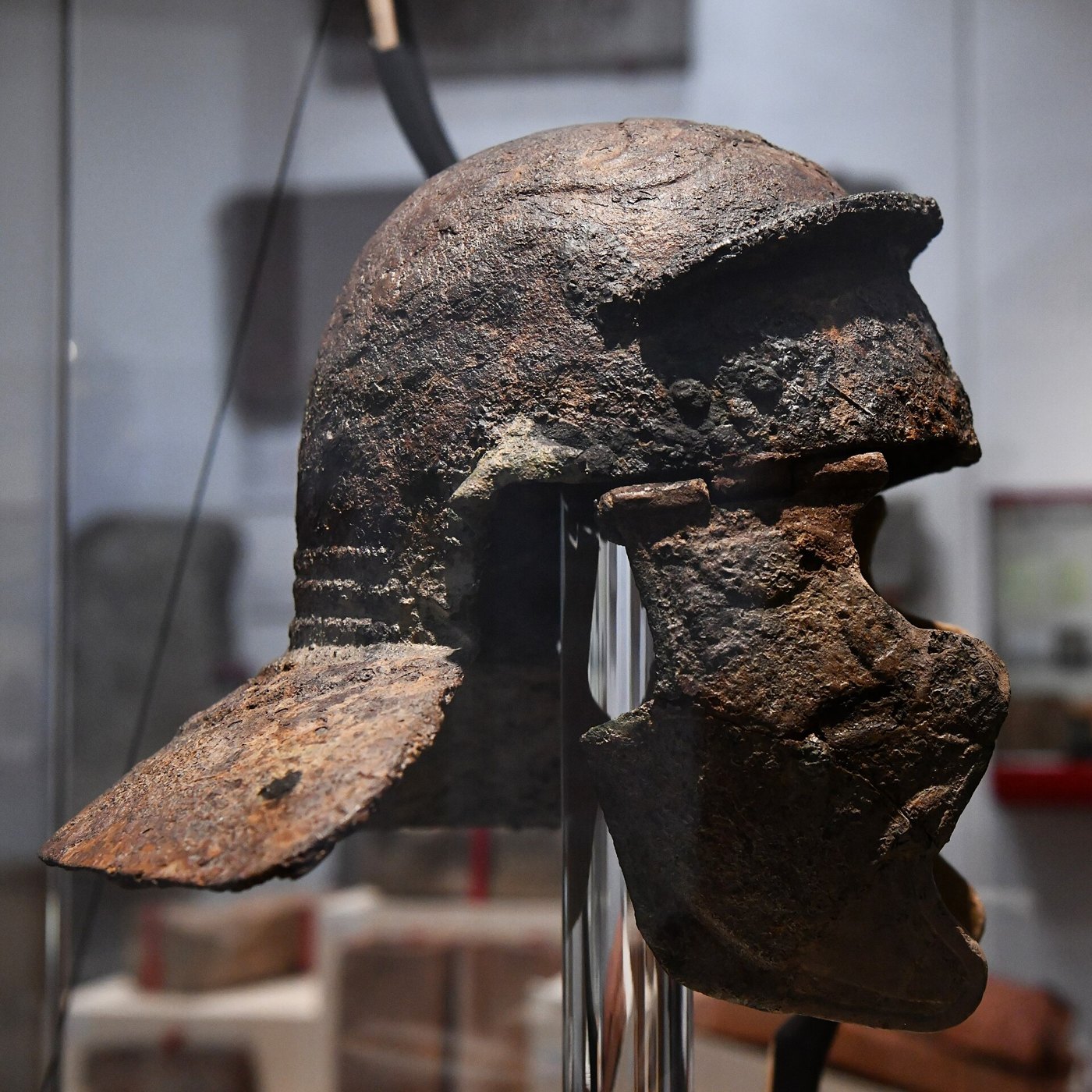
Early in the 2nd century A.D., something new appears on some helmets: iron bars fixed across the top of the bowl. This one was found in a legion's fortress at Berzovia, in Romania. So it was lost between A.D. 101 and about 119. The usual answer is the Dacian falx, a curved, scythe-like blade. Bishop says the bars were probably added at first to counter it, because it could cut through the mild steel of a Roman helmet. Probably. The main evidence is the timing. No ancient text we know of says why. And there was a side effect. With bars across the top, Bongartz notes, there was no way to fix a crest.
Crests: films and sources
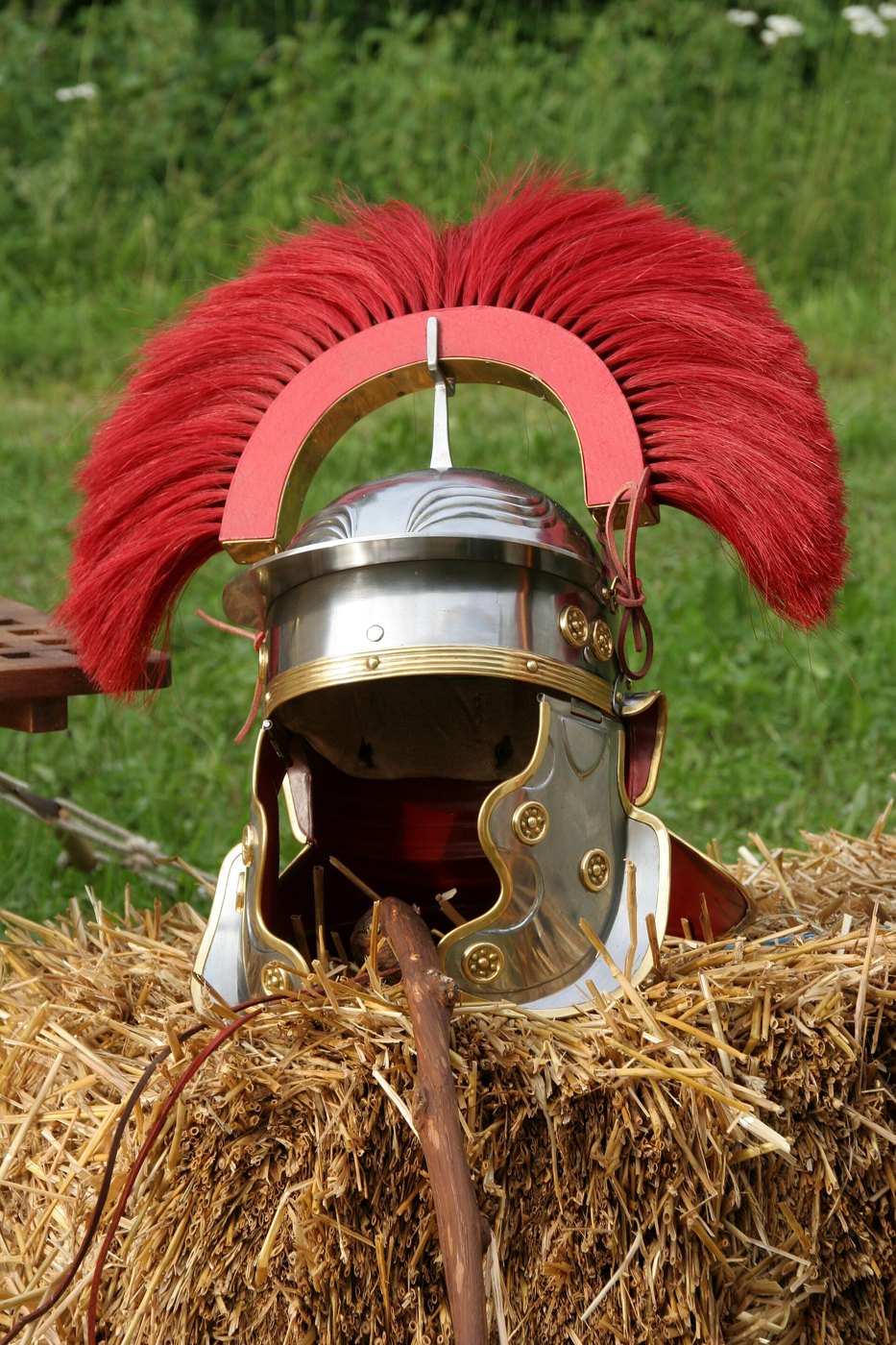
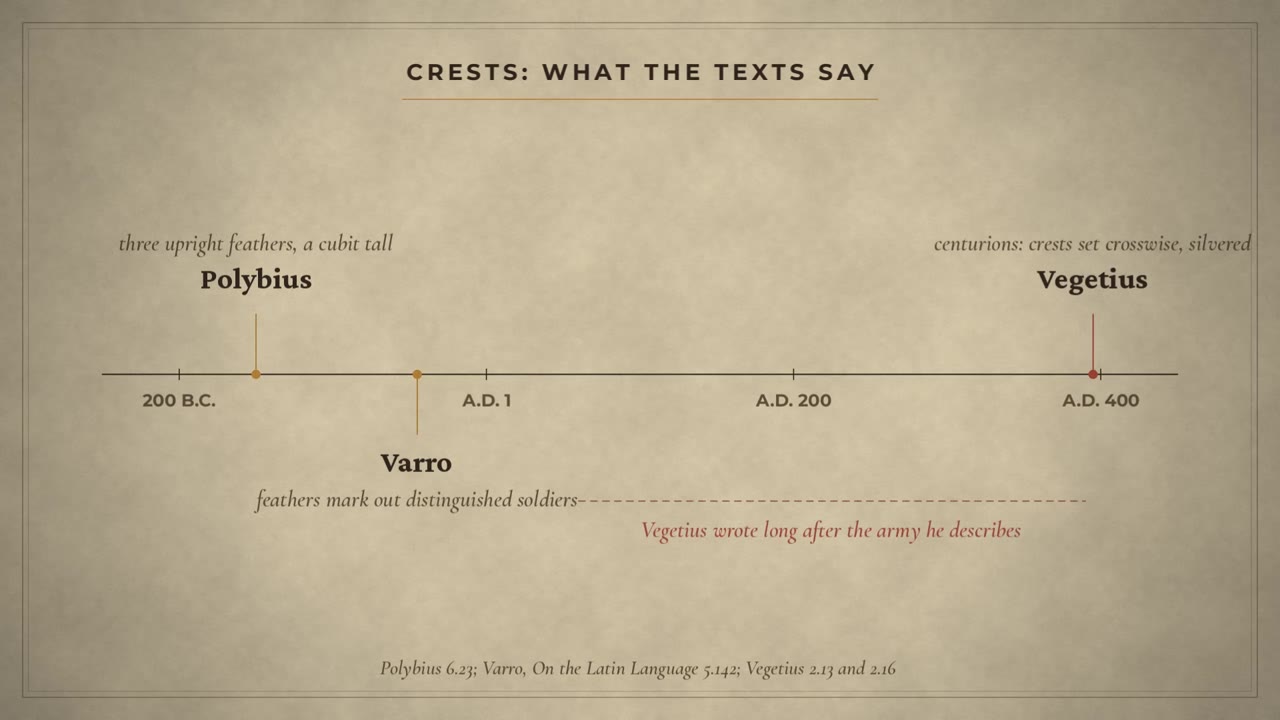
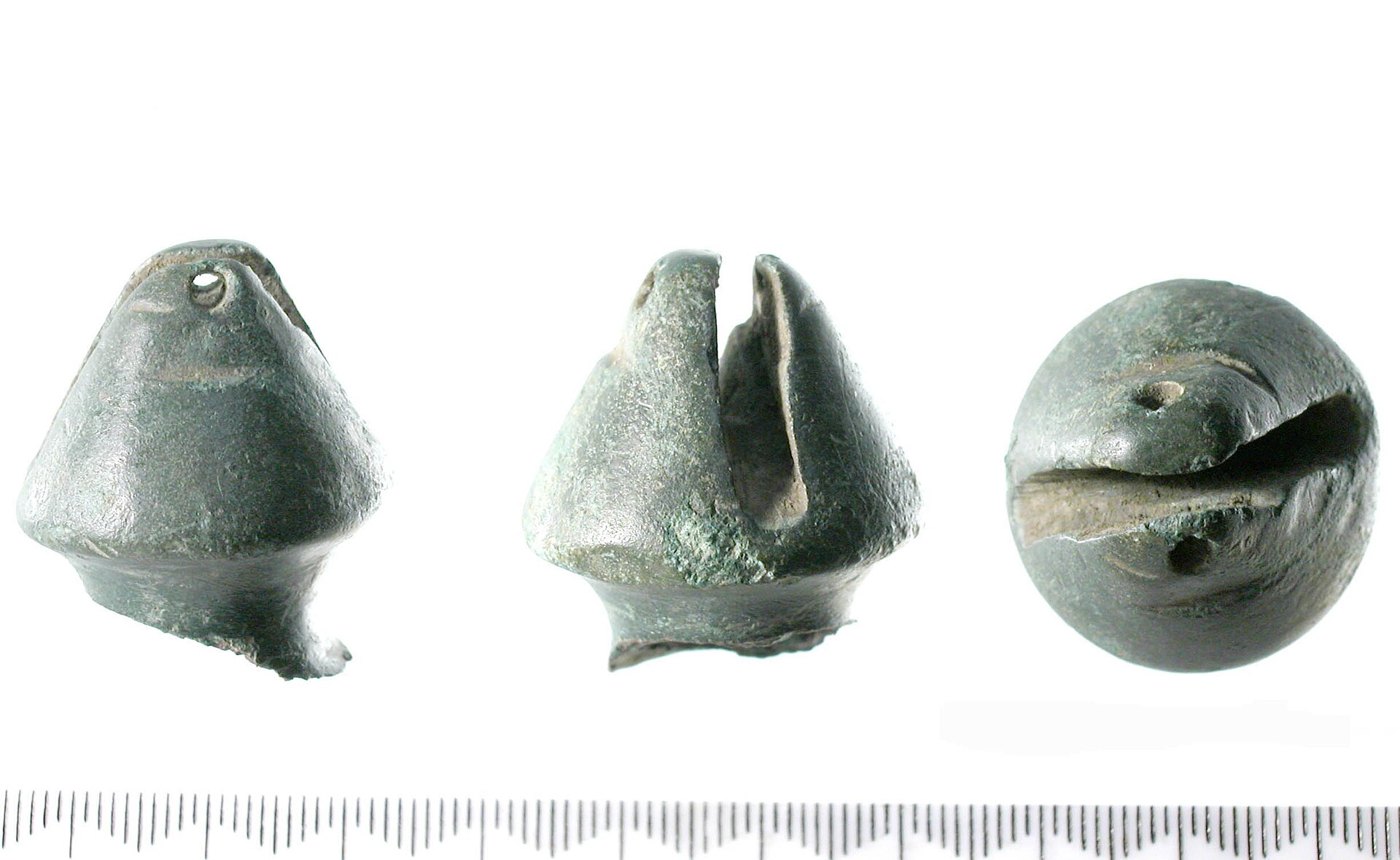
Which brings us to crests. In many films, every legionary wears one. The texts say less. Polybius has his feathers. Varro, in the 1st century B.C., says feathers on helmets marked out distinguished soldiers. Vegetius says centurions wore crests set crosswise, and silvered, so their men could find them. But he wrote at the end of the fourth century A.D. or later, about an army long gone. What the ground gives us is the fittings. Little bronze holders like these, recorded in Suffolk, once soldered to the top of a helmet. The crests themselves are lost.
What we really have
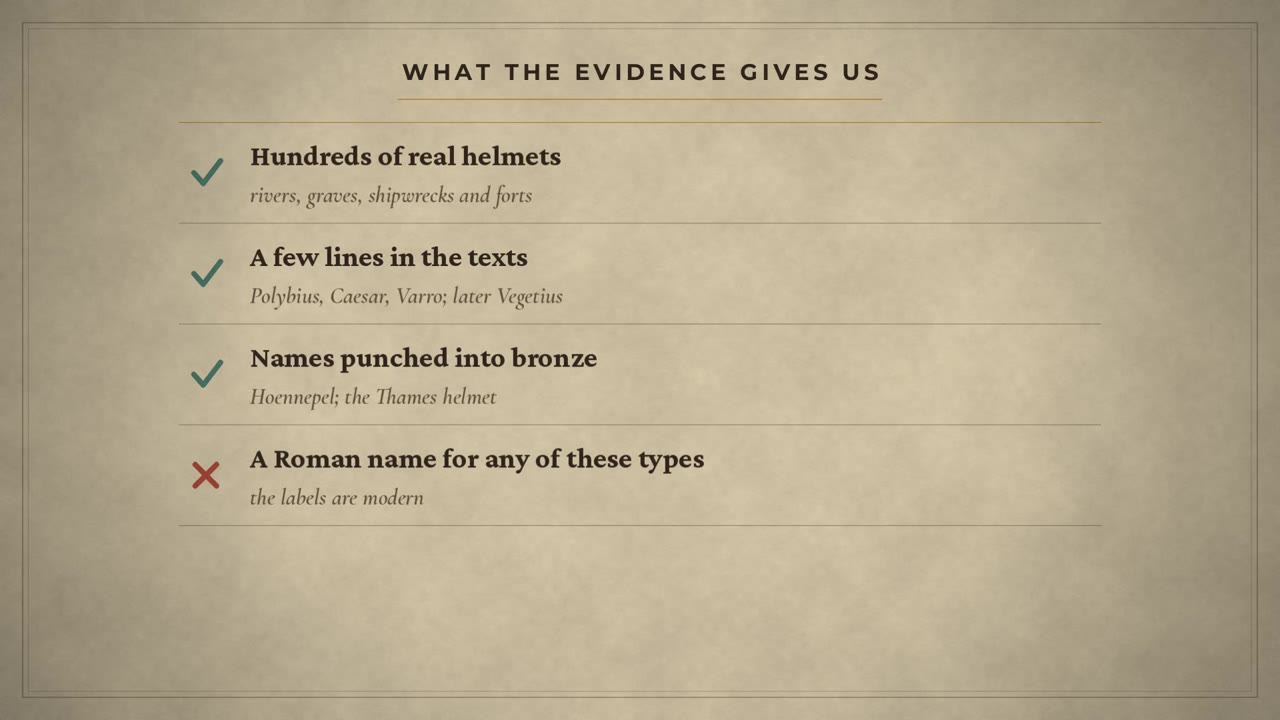
So, what do we really have? Hundreds of real helmets, from rivers, graves, shipwrecks and forts. A few lines in Polybius, Caesar, Varro, and later writers. Names, punched into bronze. A patch of lead on a dented bowl. What we don't have: a Roman name for any of these types, or a sure answer to why they changed.
Verdict, and what comes next
So that's the Roman helmet. Almost every type, says Bishop, was taken from helmets of Rome's neighbours in the north-west. And every type is named by us, not by them.
Questions for you: Why do you think a Roman soldier punched his name into his helmet: to get his own back, or something more? The bars across the top: an answer to the Dacian falx, or simply a better helmet? And what next: the scutum, or the Roman fort?
Over to you
Why did a soldier punch his name into his helmet: to get his own back, or something more? The bars across the top: an answer to the Dacian falx, or simply a better helmet? What next: the scutum, or the Roman fort?
Prefer to watch? The video on YouTube covers the same story with the full animations. Jump to a part:
- 0:00 The Sabis, 57 B.C.: no time for helmets
- 1:16 Names Rome never used
- 2:35 Montefortino: the oldest family
- 3:41 Mass production, and a helmet from Sisak
- 4:45 Coolus: the Gallic cap
- 5:48 Imperial Gallic: iron, eyebrows, neck guards
- 6:54 Names punched into a neck guard
- 8:02 What was inside
- 8:42 Bars across the top
- 9:28 Crests: films and sources
- 10:08 What we really have
- 10:32 Verdict, and what comes next
Quick answers
What was a Roman helmet called in Latin?
In Latin a helmet was a galea or a cassis. Isidore of Seville, writing in the seventh century A.D., says the cassis was made of metal plate and the galea of leather, but Roman writers also call bronze helmets galea.
Are Montefortino, Coolus and Imperial Gallic Roman names?
No. They are modern labels, mostly taken from places where helmets were found. The scholar Couissin sorted most of them in 1926; in 1975 Russell Robinson made his own scheme with lettered sub-types and named Imperial Gallic and Imperial Italic after where he thought they were made. German books mostly call the same iron helmets Weisenau.
Where did the Montefortino helmet come from?
Scholars disagree. John Paddock says there can be no doubt it came from the Celts, whose iron helmets reached Italy around 400 B.C.; Janka Istenič traces it to bronze helmets made in Etruria in the fourth century B.C. By the third century B.C. Roman soldiers were wearing it.
Did Roman soldiers put their names on their helmets?
Yes. A bronze helmet dredged from the Rhine at Hoennepel, near Kalkar, carries eight inscriptions naming centuries and soldiers, and is dated before A.D. 30 from the way the names are written. A helmet from the Thames or the Walbrook in London, now in the British Museum, names four owners in at least two centuries.
Why do some Roman helmets have bars across the top?
Iron cross-bars appear on some helmets early in the second century A.D. Mike Bishop says they were probably added at first to counter the Dacian falx; the main evidence is the timing, and no ancient text we know of says why.
Where it happened
- The river Sabis (Sambre) (57 B.C.): Caesar's battle against the Nervii (Gallic War 2.19 to 2.21); the exact site is not known.
- Montefortino, near Ancona, Italy (350 B.C.): The Celtic cemetery that gave the Montefortino type its name.
- Coolus, Marne, France (100 B.C.): Helmets found here, one of them dredged from the Marne, gave the Coolus type its name.
- Sisak (Siscia), Croatia (100 B.C.): A late Republican helmet dredged from the Kupa, apparently dented and patched with lead.
- Kalkar-Hoennepel, Germany (A.D. 20): A bronze helmet from the Rhine with eight owners' inscriptions, dated before A.D. 30.
- London (Thames or Walbrook) (A.D. 50): The Thames Coolus helmet in the British Museum, with four owners' names (RIB 2425.2).
- Hod Hill, Dorset (A.D. 45): Part of a helmet with traces of a coarse woven lining, probably linen.
- Newstead (Trimontium), Scotland (A.D. 90): James Curle found wool padding glued inside an iron cavalry helmet with a face mask.
- Berzovia (Berzobis), Romania (A.D. 110): An iron helmet with cross-bars, lost between A.D. 101 and about 119.
- Madrague de Giens, France (70 B.C.): A shipwreck of about 70 B.C. with a Coolus and a Montefortino helmet.
Sources
Ancient writers and modern work
All sources below were read between 2026-11-14 and 2026-11-15. Verbatim excerpts with page numbers are kept in `research/ancient-texts.md`,
`research/scholarship.md` and `research/finds-museums.md`. Translations are credited where a translation is quoted on screen. Anything not read
in full is marked. The sentence-by-sentence table is `claims.md`.
Ancient texts
https://www.thelatinlibrary.com/caesar/gall2.shtml. English: H. J. Edwards (Loeb, 1917) on LacusCurtius,
https://penelope.uchicago.edu/Thayer/E/Roman/Texts/Caesar/Gallic_War/2*.html; W. A. McDevitte and W. S. Bohn (1869) on Perseus.
2.19.5: the six legions that arrived first began to entrench the camp. 2.19.7: the enemy "were seen at the edge of the woods, in the river, and then at
close quarters" almost at the same moment (Edwards). 2.21.5: "The time was so short, the temper of the enemy so ready for conflict, that there was no space not only to fit badges in their places, but even to put on helmets and
draw covers from shields" (Edwards; Latin "ad galeas induendas"). 2.21.6: each man stood by the first standard he saw. Neither page annotates what
*insignia* ("badges") were, so the video does not say "crests" for them.
https://penelope.uchicago.edu/Thayer/E/Roman/Texts/Polybius/6*.html; Greek (Buettner-Wobst) on Perseus. 6.23.8: the hastati wear "a brass helmet"
(Greek *perikephalaia chalke*, a helmet of bronze); 6.23.12 to 13: "a circle of feathers with three upright purple or black feathers about a cubit in height
... to make every man look twice his real height"; 6.23.16: principes and triarii are armed the same way. A cubit is roughly 44 to 46 cm; "about 45 cm" is
our rounding.
https://penelope.uchicago.edu/Thayer/E/Roman/Texts/Polybius/Introduction*.html: born about 208 B.C.; "in 167 he was allowed to remain in Rome".
galea de coreo." The English on screen is our own translation and is labelled so.
("loricae galeaeque aeneae", Cicero, Verr. 2.4.97); *cassis* also used "promiscuously" for *galea*.
accustomed to wear on their helmets". 5.116 derives *galea* from a leather cap; it does not mention *cassis* (the leather and metal pair is Isidore's).
helmets of iron "with transverse and silvered crests" so that their men could recognise them. Vegetius wrote at the end of the fourth century A.D. or
later (he names Gratian, died A.D. 383, as dead) and describes an idealised older army; the video says so.
Modern scholarship (read in full unless marked)
UCL Discovery https://discovery.ucl.ac.uk/id/eprint/1348999. Montefortino: Celtic origin "there can be no doubt" (vol. 2, pp. 482 to 483); the type
site, a Celtic cemetery near Ancona excavated by Brizio (p. 469, 482); "nearly a hundred and fifty examples survive" (p. 470). Coolus: "a bronze helmet of
Celtic origin", early 3rd century B.C., in undeniably Roman contexts only from the 1st century B.C., "never has a crest-fixture" (pp. 640 to 641, 655).
Linings: a cheek piece from Hod Hill with traces of "a coarse woven fabric, probably linen" (vol. 1, pp. 67 to 70, citing Brailsford 1962); leather
rejected.
(https://a-r-m-e-s.org). The late Montefortino helmets: hammer marks left rough, one rivet instead of two, knobs cast and soldered on, some off-centre,
at about the time of the Marian reforms (p. 145); his disagreement with Robinson on the brow guard and neck guard, and the smaller scutum (p. 147).
Montefortino, Hagenau, Weisenau and Niederbieber go back to Couissin 1926 (p. 15); Robinson's lettered sub-types (p. 15); the Hagenau type piece from the
Rhine near Drusenheim (p. 22); the Port type adopted after the Gallic War and become Weisenau by the Augustan period (p. 23, after Pernet and Fischer);
Weisenau features, stylised eyebrows, brow guard (p. 27); cross-bars from the beginning of the 2nd century, which made a crest impossible (p. 27);
owner inscriptions (pp. 111 to 117), including the view that each soldier decided for himself and the warning that several names need not mean several
owners (p. 116); catalogue I 38, the Hoennepel helmet with eight inscriptions, dated before A.D. 30 by their wording (pp. 152 to 153, readings after
Klumbach 1974); catalogue I 106 and I 168, Berzobis: found in the praetorium of the fortress of legio IV Flavia Felix, lost between 101 and 118/19
(pp. 175, 198); lining material (pp. 50 to 51).
https://ojs.zrc-sazu.si/av/article/view/7753. Origin in Etruscan bronze helmets of the 4th century B.C.; part of Roman armament from the 3rd century B.C.;
the Coolus type, "not certain whether these are Celtic or Roman"; the Madrague de Giens wreck of about 70 B.C.; iron Weisenau helmets "in the Augustan
period ... alongside the bronze helmets".
Dredged from the Kupa; bowl "hardly ever exceeds 1 mm"; weighs 450 g, comparison weights 680 to 1182 g; a strong blow to the top "it would appear",
repaired with lead; a crude replacement knob, "perhaps done in the field, conceivably by the owner of the helmet himself"; the state may have equipped
soldiers already in the 2nd century B.C. (p. 59 n. 18); "many scholars believe" Coolus-Mannheim helmets were used in the Gallic wars, and it is "safer
to assume" Gaulish production used by Caesar's troops "to a certain extent" (p. 60).
attention to the Celtic origin, the Agen and Port group; the Nijmegen helmet "is clearly derived from the Port type"; the Port helmet's skull cap, brow
ridge and riveted neck guard (our Port drawing follows this description).
https://www.ospreypublishing.com/osprey-blog/2025/roman-infantry-helmets/ (also checked directly by the builder). Robinson split the Weisenau group
"based largely on where he thought they had been manufactured"; his system "has never been wholly satisfactory"; the types "were all derived from
helmets of the inhabitants of north-western Europe", the only true Roman development being Niederbieber; cross-pieces "probably initially to counter
the scythe-like blades of the Dacian falx, which was capable of penetrating the mild steel of a Roman helmet"; helmets "only worked with a padded lining".
(PDF from ORA, Oxford): scholars "generally attribute the monument to the years around 100 B.C., even though the overall range of proposed dates stretches
from the middle of the second century B.C. to the Augustan period". Used for the caption of the relief.
Excavation reports, museum and heritage records
automated access): a Coolus helmet of Robinson's Coolus A type, "beaten from a single sheet", weight 539.4 g, not normally fitted with cheek pieces, dated
to the mid-first century B.C.; "These bones had originally been placed into the upturned helmet for burial." Recorded by Kent County Council; the video
says only "England".
**K. Kaminski and D. Sim, Transactions of the London and Middlesex Archaeological Society 62 (2011)**: the Thames Coolus helmet in the British Museum,
"Found in the Walbrook or Thames"; "there have been four owners of the helmet, attached to at least two centuries".
of the head-piece. The padding appeared to have been composed of wool, and to have been fastened to the metal by some resinous substance, which became
sticky when hot water was applied." The padding was in the head-piece of the iron helmet with a visor-mask (pp. 168 to 170), a cavalry helmet (Trimontium Trust; NMS);
the video says so (fact-check 2026-11-15).
helmets of the 1st century A.D.; the base "was originally attached to the top of the bronze helmet with solder".
Bonn; Berzovia helmet, National History Museum of Romania, "early 2nd century"; Theilenhofen helmet, Germanisches Nationalmuseum, "2nd century"; Newstead
iron helmet and mask, National Museum of Scotland, A.D. 80 to 100; the Mainz column base with two legionaries, Landesmuseum Mainz, inv. S 341, 2nd half of
the 1st century A.D.; the Adamclisi metope with a Dacian holding a falx.
Images
Every image, its licence and author are in `image-manifest.json` and in the on-screen credits (`src/plan.py`, CREDITS). All are public domain, CC0, CC BY
or CC BY-SA. One photograph is a modern replica (a centurion's helmet with a transverse crest) and is labelled "A modern replica. Not an ancient object."
Image credits
- Bronze helmet, Montefortino type. Museum Carnuntum. Photo: Matthias Kabel, public domain
- Gallic bronze helmet, Coolus-Mannheim type, from the Tongeren region. Musee du Cinquantenaire, Brussels. Photo: Michel wal, CC BY-SA 3.0
- Bronze helmet, Montefortino type, from Straubing. Celtic Roman Museum Manching. Photo: Wolfgang Sauber, CC BY-SA 3.0
- Roman helmet, Weisenau type. Museum Carnuntum. Photo: Matthias Kabel, CC BY 2.5
- Column base with two legionaries, 2nd half of the 1st century A.D. Landesmuseum Mainz. Photo: Heiko Fischer, CC BY-SA 4.0
- Soldiers on the so-called Altar of Domitius Ahenobarbus, Rome. Louvre, Paris. Photo: Miketaylor30, CC BY-SA 3.0
- Coolus-type helmet reused as a cremation vessel, mid-1st century B.C., England. Portable Antiquities Scheme (Kent County Council), CC BY-SA 4.0
- Bronze helmet with owners' inscriptions, from the Rhine at Kalkar-Hoennepel, before A.D. 30. LVR-LandesMuseum Bonn. Photo: Heiko Fischer, CC BY-SA 4.0
- The neck guard of the Kalkar-Hoennepel helmet, with punched inscriptions. LVR-LandesMuseum Bonn. Photo: Heiko Fischer, CC BY-SA 4.0
- Roman iron helmet from Valkenburg (South Holland). Rijksmuseum van Oudheden, Leiden, CC BY 3.0 NL
- Iron helmet and face mask from Newstead (Trimontium), A.D. 80 to 100. National Museum of Scotland. Photo: Johnbod, CC BY-SA 3.0
- Iron helmet with cross-bars, from Berzovia, early 2nd century A.D. National History Museum of Romania, Bucharest. Photo: Dorieo, CC BY-SA 4.0
- The Berzovia helmet, another view. National History Museum of Romania, Bucharest. Photo: Dorieo, CC BY-SA 4.0
- Tropaeum Traiani, Adamclisi: a legionary and a Dacian with a falx (metope). Photo: Cristian Chirita, CC BY-SA 3.0
- Iron infantry helmet with foil mountings, 2nd century A.D., from Theilenhofen. Germanisches Nationalmuseum, Nuremberg. Photo: Wolfgang Sauber, CC BY-SA 3.0
- MODERN REPLICA of a centurion's helmet with a transverse crest, shown by a re-enactment group. Not an ancient object. Photo: Matthias Kabel, CC BY-SA 3.0
- Crest holder from a Coolus-type helmet, 1st century A.D. Portable Antiquities Scheme (Suffolk), CC BY-SA 4.0
- Crest holder from a Coolus-type helmet, 1st century A.D. Portable Antiquities Scheme (Suffolk), CC BY-SA 2.0
- Iron legionary helmet, early 1st century A.D. National Roman Legion Museum, Caerleon. Photo: Michael Garlick, CC BY-SA 2.0
- Column base with two legionaries, Mainz, 2nd half of the 1st century A.D. Landesmuseum Mainz. Photo: Carole Raddato, CC BY-SA 2.0
- Animations, maps and diagrams: original work, Spoken History. Map data: Natural Earth, public domain.
- Music: Mendelssohn - String Quartet No. 6 in F minor, Op. 80 - III. Adagio (Musopen String Quartet): Felix Mendelssohn; released to the public domain by Musopen (PD-author on the Commons file page)
- Music: Brendan Kinsella - Mozart - Sonata No 13 In B Flat Major K333 - II Andante Cantabile: Wolfgang Amadeus Mozart; CC0 on the Commons file page
- Music: Mozart - String Quartet No. 19 in C major, K465 'Dissonance' - II. Andante cantabile (Musopen String Quartet): Wolfgang Amadeus Mozart; released to the public domain by Musopen (PD-author on the Commons file page)
- Music: Dvořák - String Quartet No. 12 in F major, Op. 96 'American' - II. Lento (Musopen String Quartet): Antonín Dvořák; released to the public domain by Musopen (PD-author on the Commons file page)
- Music: Brahms - Symphony No. 1 in C minor, Op. 68 - II. Andante sostenuto (Musopen Symphony): Johannes Brahms; released to the public domain by Musopen (PD-author on the Commons file page)
Transcript
Read the full narration
Roman Helmets. From Montefortino to Imperial Gallic. 57 B.C. Northern Gaul, beside a river the Romans called the Sabis. Six of Caesar's legions have marched in, and the men are digging the defences of their camp. Then the Nervii burst out of the woods. So fast, Caesar writes, that they seemed to be at the forest edge, in the river, and at close quarters, almost at the same moment. In the Loeb translation: the time was so short, the temper of the enemy so ready for conflict, that there was no space not only to fit badges in their places, but even to put on helmets. Men fought where they stood, under the first standard they saw. So while they dug, their helmets were not on their heads. And when the attack came, there was no time to put them on. The Roman helmet. Last time I asked: the helmets, or the scutum? Here are the helmets. Today: what it was, what has been dug up, and what the texts really say. And the first surprise: not one of the type names on the museum labels is Roman. In Latin, a helmet was a galea, or a cassis. A writer of the seventh century A.D., Isidore of Seville, says the cassis was made of metal plate, and the galea of leather. But Roman writers call bronze helmets galea too. The names in museums, Montefortino, Coolus, Hagenau, Weisenau, are modern. Most of them are places where helmets were found. Montefortino is a Celtic cemetery near Ancona, in Italy, dug in the 1890s. Coolus is on the river Marne, in France, where helmets of this kind were found, one of them dredged from the river. Hagenau is a town in Alsace whose museum holds a helmet from the Rhine. Weisenau is a district of Mainz. The scholar Couissin sorted most of them in 1926. In 1975 the British armour expert Russell Robinson made a scheme of his own, with lettered sub-types. He split the iron helmets into Imperial Gallic and Imperial Italic, after where he thought they were made. German books mostly call the same helmets Weisenau. The archaeologist Mike Bishop says Robinson's system has never been wholly satisfactory. So: useful labels. But they are ours, not Rome's. The oldest family is the one we call Montefortino. A tall bronze bowl, a knob on top, a short lip at the back over the neck, and hinged plates for the cheeks. Where did it come from? Here scholars disagree. John Paddock, who wrote his doctoral thesis on these helmets, says there can be no doubt it came from the Celts, whose iron helmets reached Italy around 400 B.C. Janka Istenič, who published the finds from Slovenia, traces it to bronze helmets made in Etruria in the fourth century B.C. Either way, by the third century B.C., Roman soldiers were wearing it. And here we have a witness. Polybius, a Greek who lived in Rome in the second century B.C., says the heavy infantry wear a bronze helmet. On top, a circle of feathers, with three upright purple or black feathers, about a cubit tall. That is about 45 centimetres. Why? In Paton's translation: to make every man look twice his real height. About 150 of these helmets survive, Paddock counted. A study from 2021 says about 200. And the late ones look rushed. Paddock describes hammer marks left rough, one rivet where there used to be two, and knobs made separately and soldered on, some of them off-centre. He links that to the time of the army reforms credited to Marius, and to arming men in bulk. Ivan Radman-Livaja thinks the state may have started equipping soldiers earlier. One of these late helmets was dredged from the river Kupa, near Sisak in Croatia. Its bronze is hardly ever more than a millimetre thick, and it weighs 450 grams. Other helmets of the period weigh up to about 1.2 kilos. It seems to have taken a hard blow on the top. The damage was patched with lead, and the broken knob replaced by a clumsy new one. Perhaps in the field, says Radman-Livaja, conceivably by the owner himself. Who he was, we don't know. Next, the Coolus. A low, round bronze cap with a short neck guard, and no knob at all. It is Celtic in origin, says Paddock. It appears in the third century B.C., and turns up with the Roman army only in the first century B.C. Was it ever made in Roman workshops? Still debated. Radman-Livaja thinks it safer to assume the Gauls made it, and that Caesar's troops used it to some extent. A ship that sank off the south coast of France around 70 B.C. carried both kinds: a Coolus and a Montefortino, in use side by side. So which helmets lay beside the trenches at the Sabis? We don't know. Many scholars think Caesar's men wore some like these in Gaul. And one Coolus helmet from England, from the middle of the first century B.C., had a very different end. It was set upside down in a pit, and the burnt bones of a human being were placed inside it. A helmet, used as an urn. Then, under Augustus, the Romans begin to wear mostly iron helmets, alongside the bronze ones. A deep guard over the neck. A bar across the brow. Guards over the ears. Broad cheek pieces. And on the front, two curved ridges beaten into the metal, like eyebrows. Robinson pointed to Celtic iron helmets, of the kind found at Port, in Switzerland. Peter Connolly agreed that at least one early Roman helmet is clearly derived from them. Astrid Bongartz, in a doctoral thesis from Cologne, goes further: the Romans took the Celtic helmet over after what they saw in the Gallic War, and by the time of Augustus it had become the Weisenau type. Why the bigger neck guard, and the brow bar? Robinson saw an answer to the slashing swords of Rome's enemies. Paddock disagreed. Rome had been facing those swords for three hundred years. He wondered whether it had more to do with a smaller shield. The evidence does not settle it. Now look closely at this neck guard. A bronze helmet of the Hagenau kind, dredged from the Rhine at Hönnepel, near Kalkar, in Germany. Punched into it, dot by dot, are names. The century of Amilisius: Tiberius Calventius. The century of Satrius: Publius Messius. A man of the seventh cohort. Eight inscriptions in all. From the way the names are written, it is dated before A.D. 30. Another, from the Thames or the Walbrook in London, now in the British Museum, carries the names of four owners, in at least two centuries, says the standard edition of Roman inscriptions from Britain. Why mark a helmet? Perhaps to get your own, well-fitting one back after weapons were handed in. Bongartz thinks it was not compulsory: each man decided for himself. Several names need not always mean several owners, she warns. But on the London helmet, the editors count four. If you are enjoying this type of content, please don't forget to subscribe. What was inside? A helmet only works with a padded lining, says Bishop. At Hod Hill, in Dorset, the hill fort from our scorpion episode, part of a helmet from the first century A.D. carries traces of coarse woven fabric, probably linen. At Newstead, in Scotland, James Curle found thick padding inside an iron cavalry helmet with a face mask. It seemed to be wool, fastened to the metal with a resinous substance that went sticky in hot water. Leather too? Paddock rejects it. Bongartz will not rule it out. What shape the linings took, nobody knows. Early in the 2nd century A.D., something new appears on some helmets: iron bars fixed across the top of the bowl. This one was found in a legion's fortress at Berzovia, in Romania. So it was lost between A.D. 101 and about 119. The usual answer is the Dacian falx, a curved, scythe-like blade. Bishop says the bars were probably added at first to counter it, because it could cut through the mild steel of a Roman helmet. Probably. The main evidence is the timing. No ancient text we know of says why. And there was a side effect. With bars across the top, Bongartz notes, there was no way to fix a crest. Which brings us to crests. In many films, every legionary wears one. The texts say less. Polybius has his feathers. Varro, in the 1st century B.C., says feathers on helmets marked out distinguished soldiers. Vegetius says centurions wore crests set crosswise, and silvered, so their men could find them. But he wrote at the end of the fourth century A.D. or later, about an army long gone. What the ground gives us is the fittings. Little bronze holders like these, recorded in Suffolk, once soldered to the top of a helmet. The crests themselves are lost. So, what do we really have? Hundreds of real helmets, from rivers, graves, shipwrecks and forts. A few lines in Polybius, Caesar, Varro, and later writers. Names, punched into bronze. A patch of lead on a dented bowl. What we don't have: a Roman name for any of these types, or a sure answer to why they changed. So that's the Roman helmet. Almost every type, says Bishop, was taken from helmets of Rome's neighbours in the north-west. And every type is named by us, not by them. Why do you think a soldier punched his name into his helmet? To get his own back, or something more? Those bars across the top: an answer to the Dacian falx, or simply a better helmet? And what should I take apart next? The scutum, or the Roman fort? Thanks for watching, and I'll see you in the next one. It's on your screen right now. Tap it, and I'll see you there.
All 24 topics
More episodes
Lorica Segmentata: The Armour from Corbridge
In 1964 a training dig at Corbridge, close to Hadrian's Wall, found a chest buried under a floor with twelve unmatched sections of Roman plate armour. What the lorica segmentata was, why...
Read the story
What Was the Gladius, Really? Rome's Sword
Livy says Philip V's soldiers were horrified by the wounds of the Spanish sword. What was the Roman gladius, really? The origin story in the Suda and the dispute over when and from whom...
Read the story
Roman Sling Bullets: Insults Cast in Lead
Roman lead sling bullets, the glandes: how they were cast, what the inscribed bullets from Octavian's siege of Perusia (41 to 40 B.C.) say, the disputed story of three hundred sacrificed at...
Read the story
What Was a Pugio?
A coin struck by Caesar's killers shows two daggers. The pugio, Rome's short dagger, appears in the stories of Caesar, Scaevinus, Arria and Sertorius, none of them a battle. What museums...
Read the story
What Is a Caltrop?
A few centimetres of iron with four spikes, so shaped that one point always stands up. What the Romans called it, the story of buried caltrops at Gaugamela that only Curtius tells, Vegetius...
Read the story
The Roman Onager: Rome's One-Armed Stone-Thrower
A one-armed Roman stone-thrower, named after a wild ass, shook Persian siege towers apart at Amida in A.D. 359. How it worked, how it was crewed and carried, what it really did, and what...
Read the story
The Roman Scorpion: Rome's Sniper Weapon
A Gaulish warrior on a burning wall is hit by a bolt from a machine he never saw. The Roman scorpion was a torsion bolt-shooter powered by twisted sinew and hair. How it worked, who built...
Read the story